Schwalbe Rick XC Pro SpeedGrip 2.4
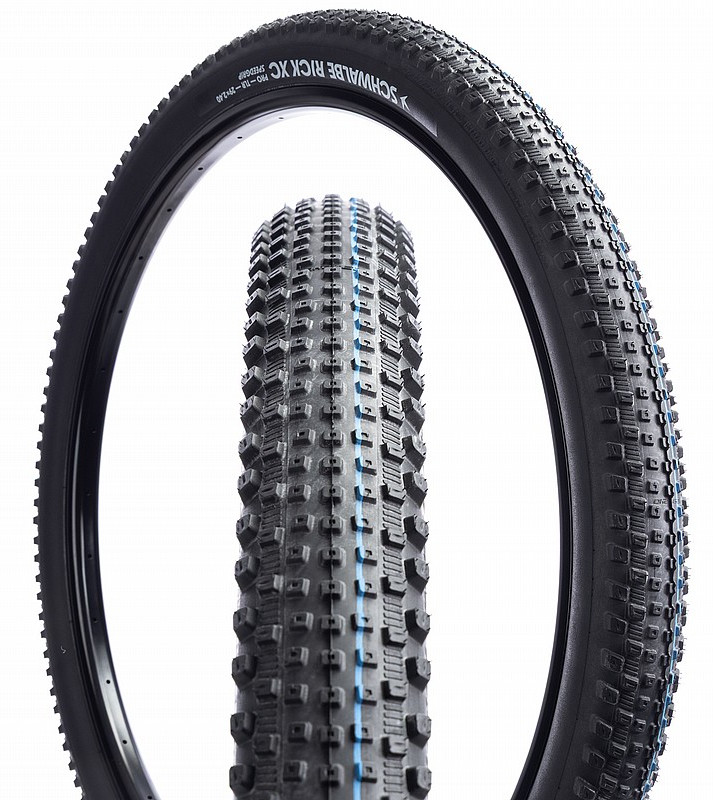
A very fast XC tire that runs closer to a 2.3 or 2.35, but delivers predictable braking, confident cornering, and surprising capability in rough terrain.
Why I Like It
Given its sub-20W BRR test result, I expected this tire to exist in the “sketchy, but very fast XC tire” space. This expectation was compounded by the well-known fact that Ricks measure a solid 0.1” smaller than the 2.4 stamped on the sidewall. However, I was excited to see what this skinny, fast-rolling tire could muster and was not disappointed.
It rolls extremely fast (no surprise here), but the evenly spaced tread pattern and slightly taller side knobs make it a plenty capable tire on a dry day. I could brake late and hard into corners and feather my speed when I misjudged the entry. Overall, I found this tire to be capable and totally manageable on just about any dry terrain, but I’d certainly be reaching for something with more volume and taller knobs on a mixed-wet day or a long marathon course where fatigue from the lower volume starts to eat away at the gain from RR.
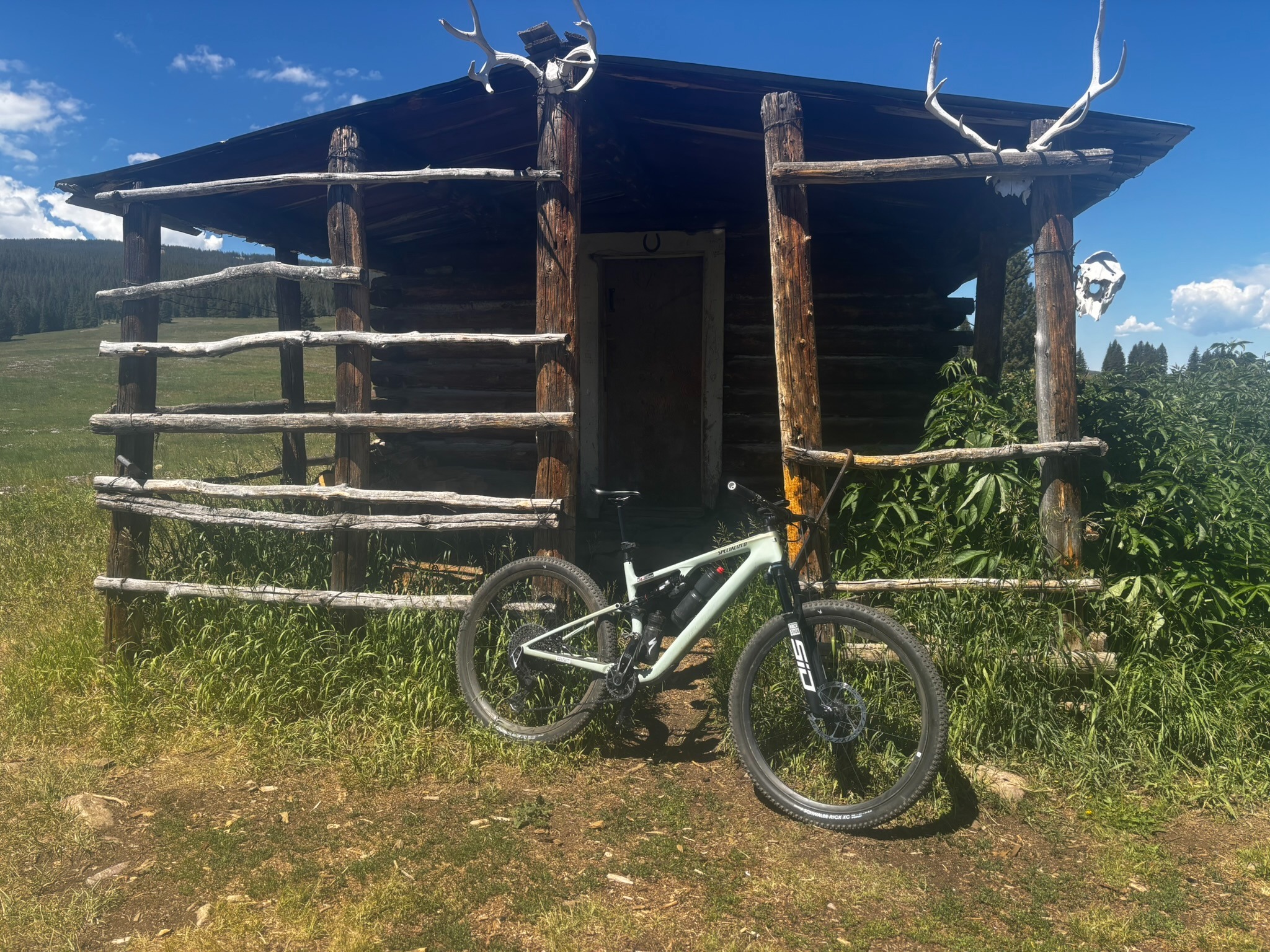
Disclosure: I purchased these tires myself. This review is based on my own testing and impressions.
Quick Specs
- Weight of each: 763g / 784g measured (760g claimed)
- Casing: XC PRO, 67 TPI with ADDIX SpeedGrip compound
- Width (measured at 14/16 PSI on 29mm internal rims):
- 2.28” front / 2.31” rear
- Knob height: ~2.0mm center / ~4.5mm shoulder
- Best conditions: dry
- Best for: fast XC and marathon courses with long climbs and technical, dry descents (although the smaller volume introduces more fatigue)
In My Setup
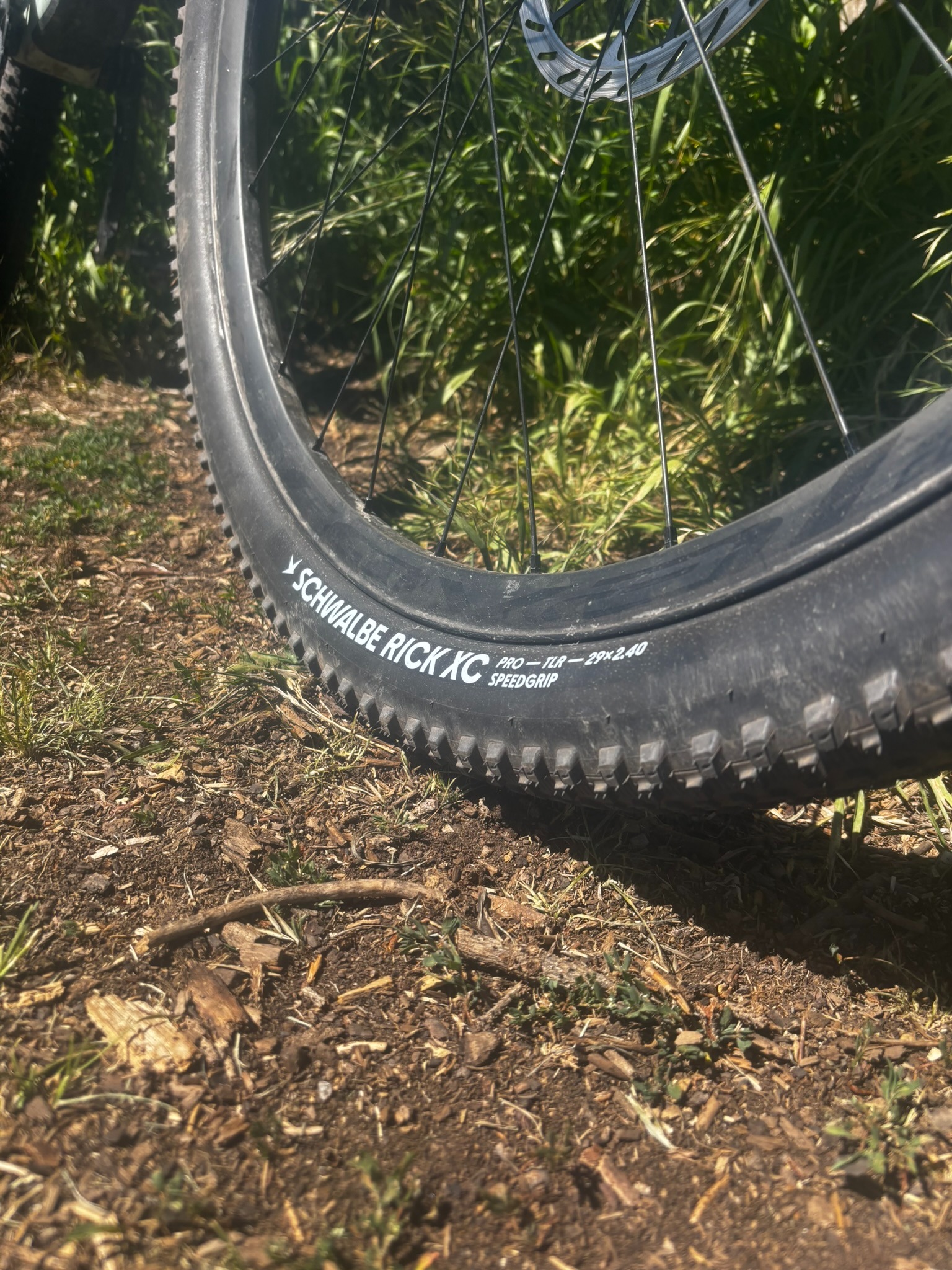
- Rick XC Pro SpeedGrip 2.4 front and rear
- Bike: Specialized Epic 8 ↗️ with 120mm Flight Attendant
- Wheels: Roval Control, 29mm internal
- Inserts:
 Vittoria Air-Liner Light inserts ↗️
 - Pressures: 14 PSI front / 16 PSI rear
- Trails:
- Vail Mountain and Beaver Creek: long fire-road climbs into high-alpine singletrack and fast, rocky, sometimes rowdy descents
- Meadow Mountain and Whiskey Creek: loose-over-hard corners, rocky/rooty descents
I put about 200–250 miles and 20–25 hours on the Ricks. Conditions were almost exclusively dry, with one morning of damp, tacky dirt after overnight rain.
I also raced Park City Point 2 Point on them, but I’m not using that day to judge their handling. A dying battery caused my pressure gauge to read about 4 PSI low (a fun new feature I didn’t know about), so I raced with far more pressure than intended and the bike felt noticeably worse descending. That’s on me, not the tires. They held up, got the job done, and I got a lesson in trusting my instincts when they diverge from my tools.
Treat It Like a 2.3”
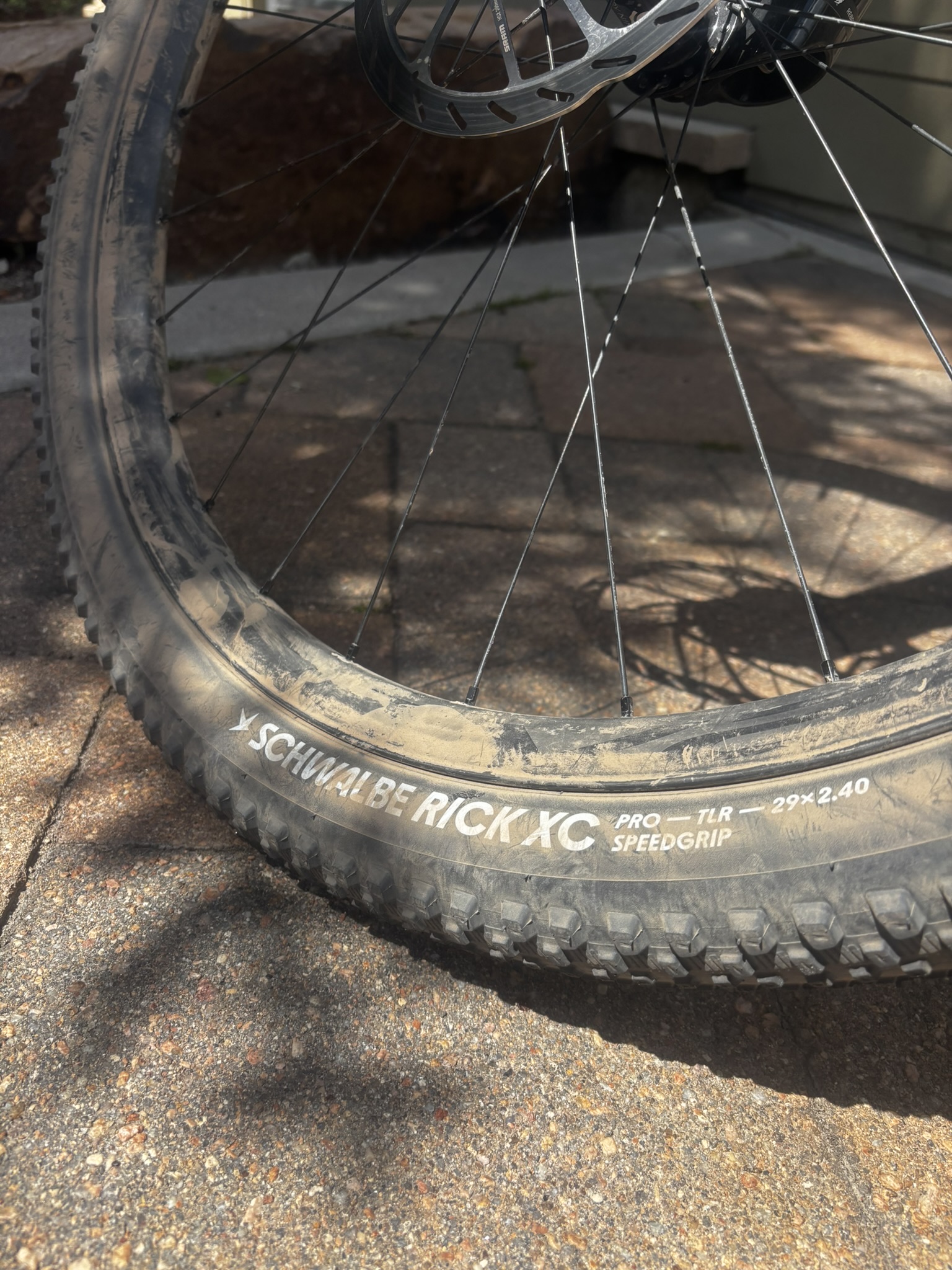
The Rick XC is not a 2.4 tire despite what the sidewall says. Clocking mine at 2.28”/2.31”, it couldn’t even be reasonably labeled as a 2.35” tire. It’s frustrating that Schwalbe chose to market these as 2.4s but by now it’s no secret that these tires are nowhere near the advertised size.
Compared with a higher-volume casing, the Rick feels harsher through repeated rough impacts. I noticed that through flat, chunky, pedally sections it was noticeably slower than a higher-volume tire. You just can’t stay on the gas at speed through rock gardens like you can with a 2.4.
An Interesting Approach to Pinch Flats
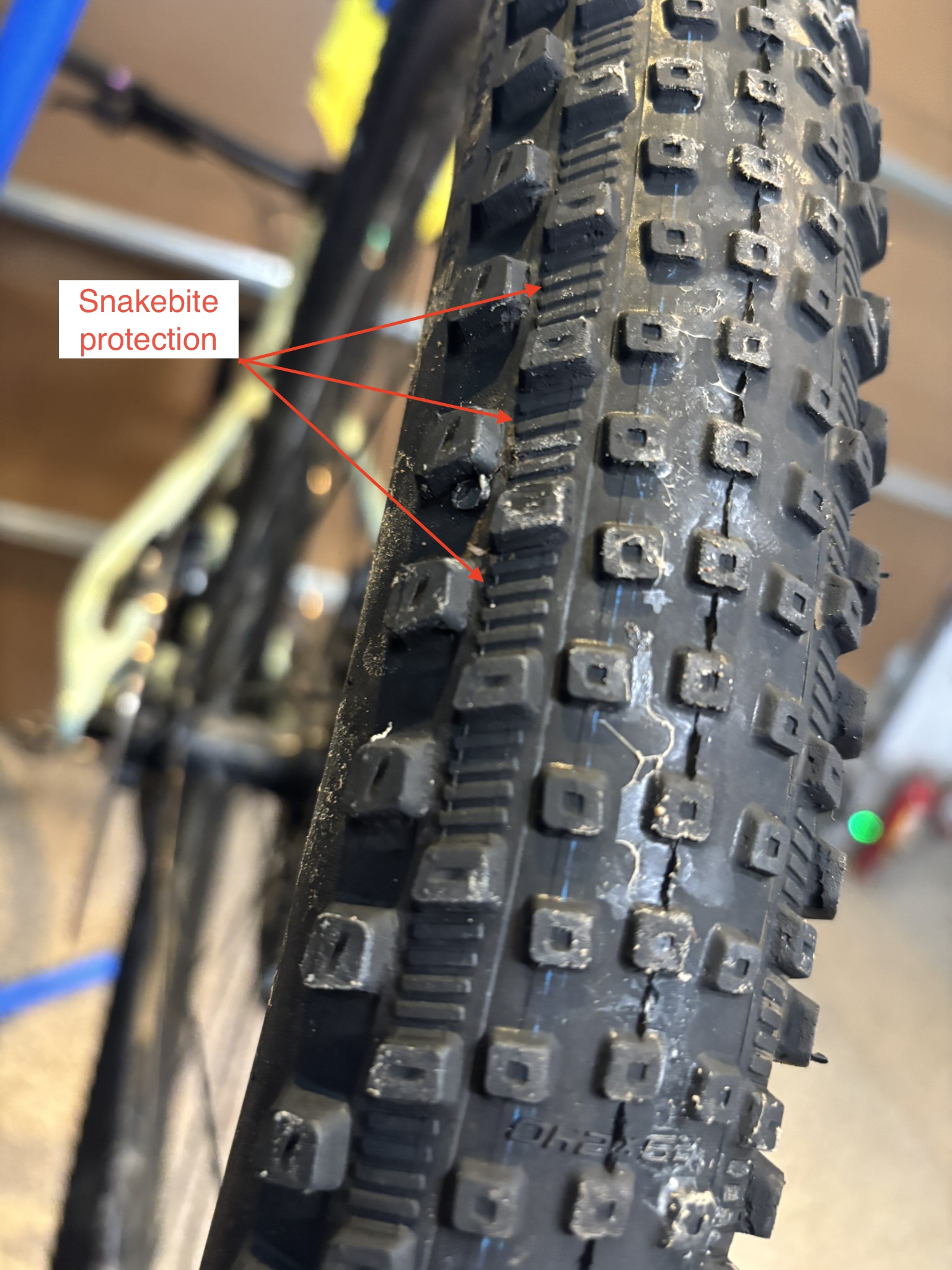
Schwalbe calls out added reinforcement in the transition area between the center and shoulder tread blocks for SnakeBite protection. In all the cases of my pinch flats, the larger of the two holes (or the only hole) is in the tread rather than at the bead. While many XC tires have added casing support at the sidewalls (including the Ricks), Schwalbe has added a little extra rubber in the transition area to dampen the blow, which seems like a pretty smart move and is quite unique to this tire.
Rolling Speed
Rolling speed is the Rick’s clearest strength.
It feels quick on long climbs, smooth dirt, and connecting sections. It was not quite as fast-feeling as the Pirelli Scorpion XC RH Race Lite tires I’ve also been testing (an ultra-low-profile tire), but it felt noticeably faster than my familiar 2.4” setups.
The numbers from Bicycle Rolling Resistance generally support that impression. Under BRR’s current low-pressure MTB protocol, its single-tire results include:
| Tire | Rolling resistance |
|---|---|
 Pirelli Scorpion XC RH Race Lite 2.4 ↗️ Pirelli Scorpion XC RH Race Lite 2.4 ↗️ | 16.7 W |
| Schwalbe Thunder Burt Super Race 2.35 ↗️ | 17.3 W |
| Schwalbe Rick XC Pro SpeedGrip 2.4 ↗️ | 19.3 W |
| Continental Dubnital Race Rapid 2.4 ↗️ | 20.6 W |
Although it’s a bit unfair to compare it to other tires that are actually 2.4”, the Rick sits remarkably close to some extremely low-profile race tires while providing a much more capable tread pattern.
Why SpeedGrip? I haven’t ridden the Speed compound, but BRR measured just 0.3 W between them while SpeedGrip scored slightly higher in hard-surface wet grip. I’m down to trade fractions of a watt for a slightly grippier compound, but to each their own.
Braking and Cornering
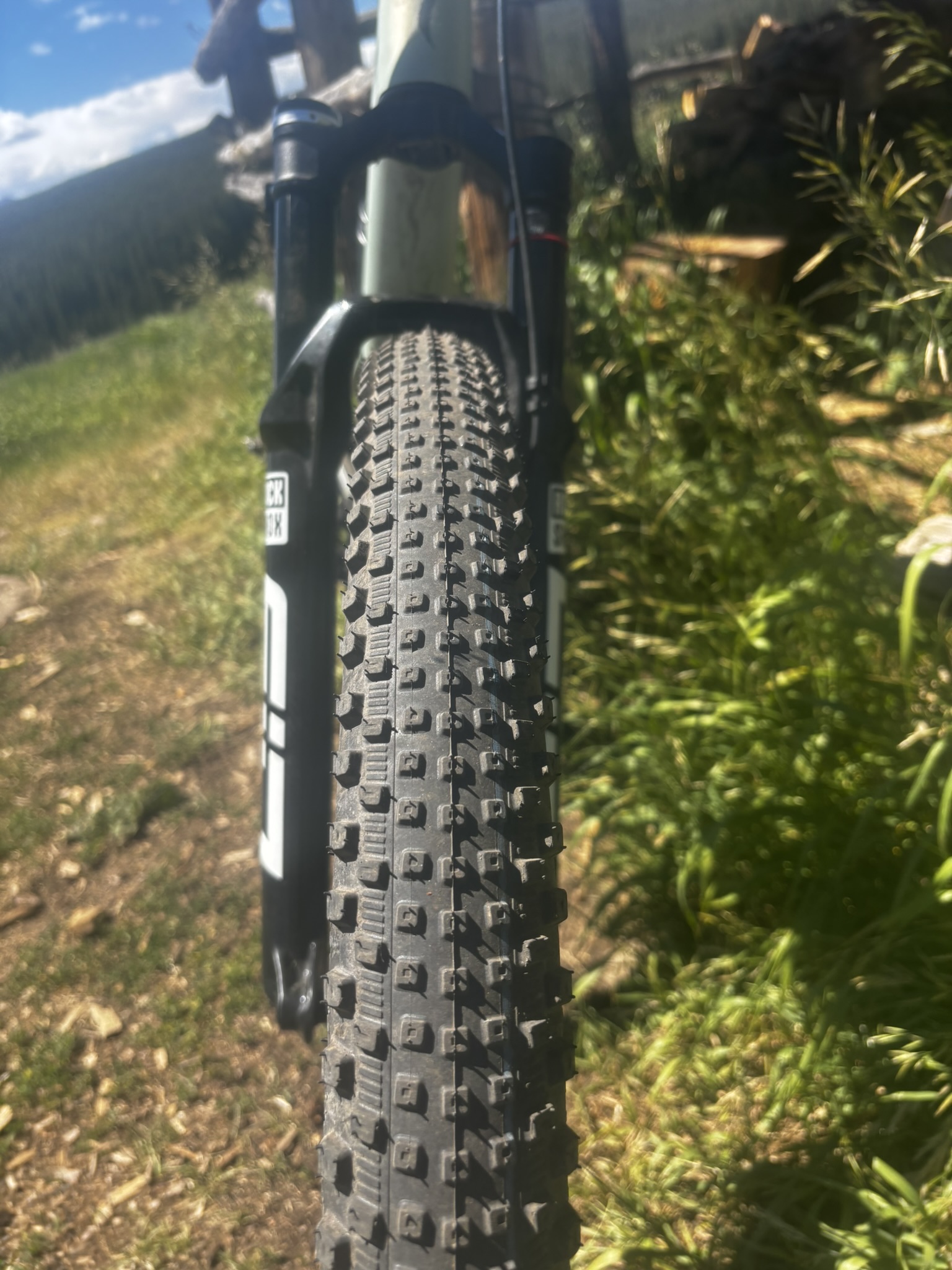
The center tread is low, but the knobs are arranged in a way that creates a forgiving progression as the tire moves from upright braking into a leaned corner. There was no awkward dead zone where the bike suddenly felt unsupported.
I could:
- brake late and aggressively
- get the bike slowed sufficiently before the apex
- release the brakes
- let the bike accelerate out of the corner
Many low-profile tires introduce enough uncertainty that you start braking earlier or entering corners more conservatively. I expected the Rick to demand that kind of mental management. It just didn’t.
Loose-over-Hard and Moon Dust
The Rick was especially entertaining in deep Colorado moon dust and loose-over-hard conditions. Both ends could be moved around, but the loss and recovery of traction felt progressive. The tire didn’t alternate between gripping completely and disappearing, which kept me upright and smiling.
Climbing Traction
I never had an issue with rear-wheel spin, even on steep, dry, loose-over-hard climbs.
There are enough knobs on the Rick’s center tread to find traction in dust and loose dirt. I still wouldn’t dare to reach for this tire on a wet day. Although I didn’t test it in wet conditions, I’d expect this tire to have you off the bike far too often through roots, polished rock, and muddy climbing.
The Puncture
I did have one puncture in the rear tire late in a ride on a moon-dust-covered descent filled with hidden sharp rocks. I was tired, hit something hard, and immediately felt sealant spraying onto my leg.
The hole was just inside the shoulder tread, directly behind a side knob. The sealant came close to closing it, but flexing the tire caused the hole to reopen. I put a Dynaplug in it and that was the end of it.
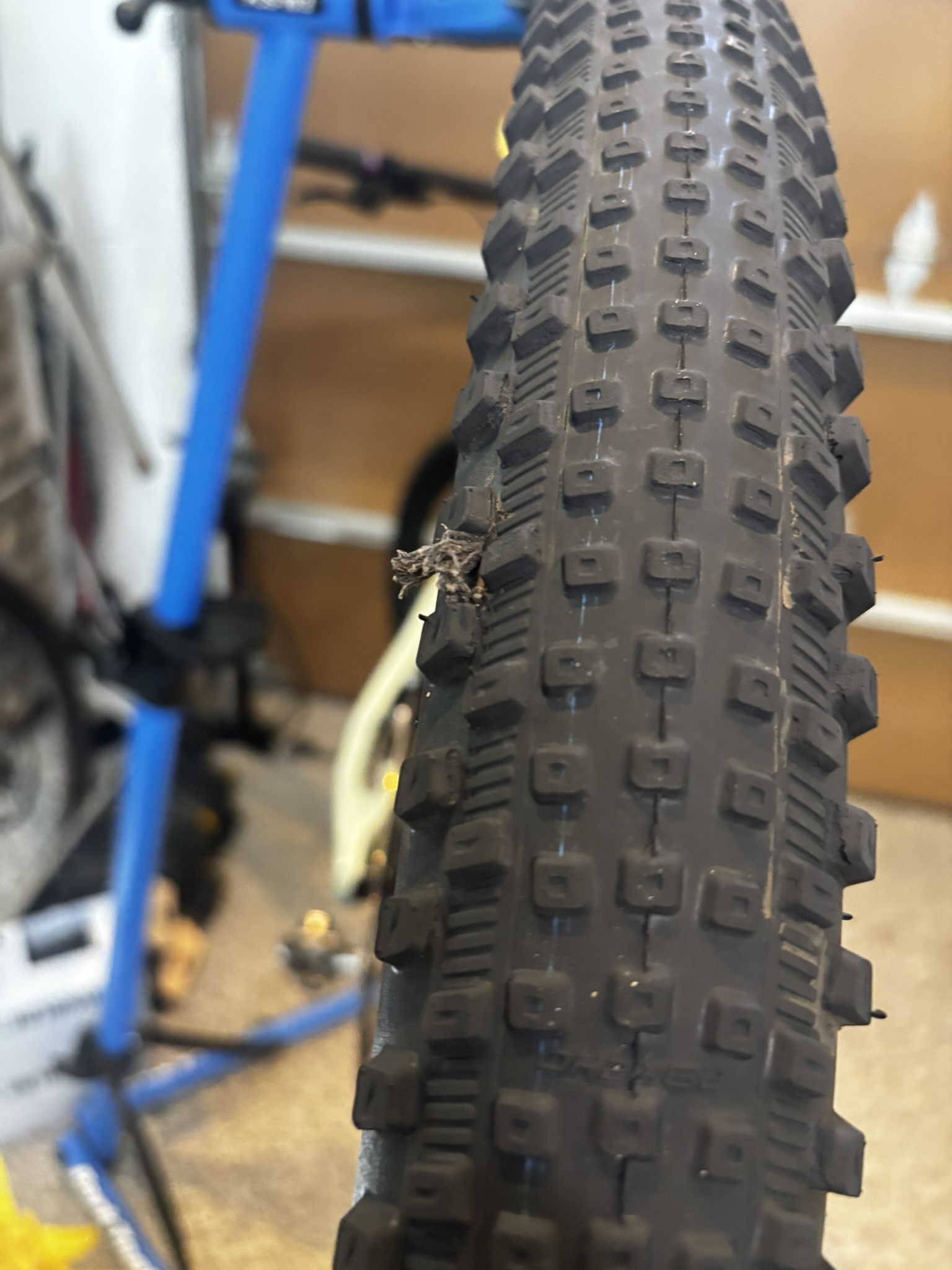
I’ve since put 15 additional hours on that tire with the plug still installed and have had no further trouble. When I pulled the tire off most recently, I replaced the Dynaplug with a permanent 
I’m tempted to write it off as an unlucky impact, but it gives me a little less confidence in the puncture resistance of this tire. That being said, I pushed this tire hard and a single puncture was no surprise.
Wear
After approximately 200–250 miles, the rear center knobs are visibly shorter than those on the front tire. There’s still plenty of usable tread remaining, and none of the knobs have torn at their bases despite repeated rocky, high-speed abuse. The only damaged knob is the one directly adjacent to the puncture.
Final Take
If you’re considering running a Thunder Burt or XC RH type tire but the low-profile tread is giving you a little heartburn, the Ricks are for you. In dry conditions, the Rick has a very capable tread pattern that comes with a blistering rolling speed.
The “2.4” Ricks are closer to a 2.3” tire and this comes at the cost of getting knocked around more in chunky sections. If you reach for this tire on a course that has a lot of fast, pedally chunk, the smaller volume will cost you time.
Deal Finder
Where to buy
Related Gear
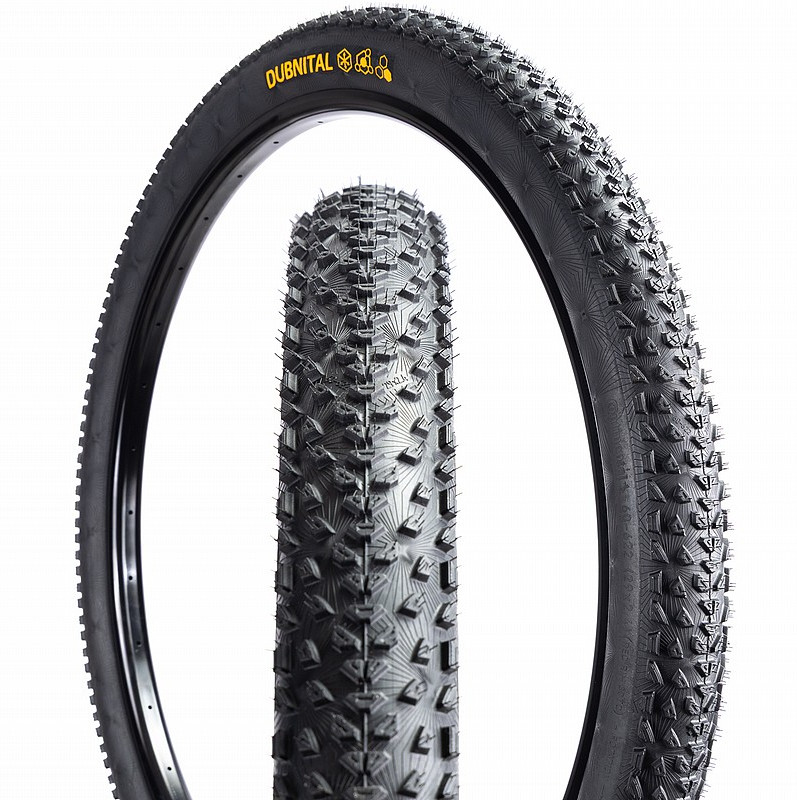
Continental Dubnital 2.4 Race Rapid
An extremely light and fast-rolling XC tire with outstanding grip for its category, but a very narrow use case in the ultra-light Race Rapid casing.
Read the review →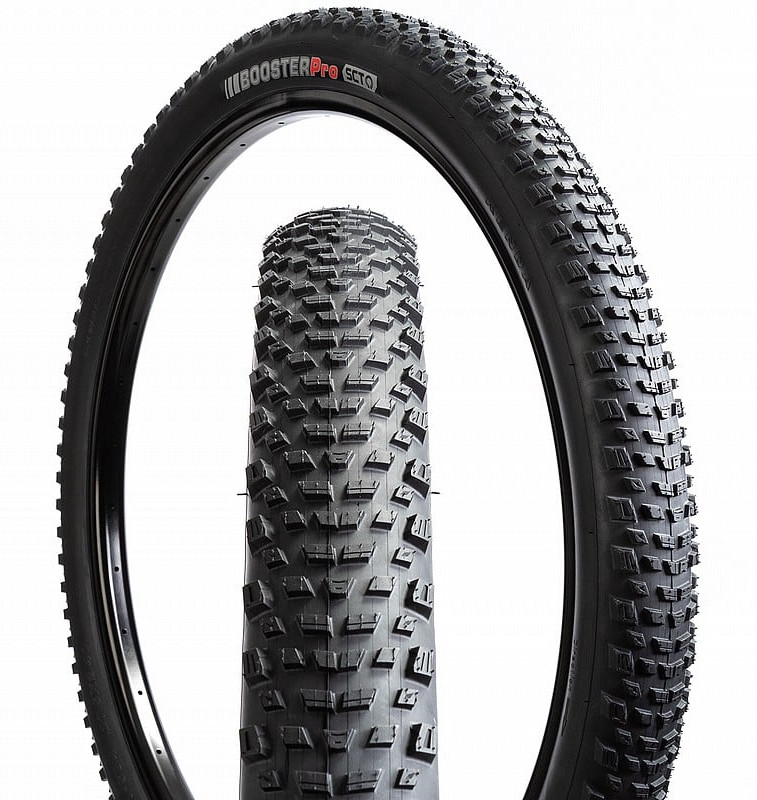
Kenda Booster Pro 2.4 SCT (120 TPI)
XC race tire with aggressive knobs and SCT protection — a lighter, confident alternative to the Maxxis Ikon.
Read the review →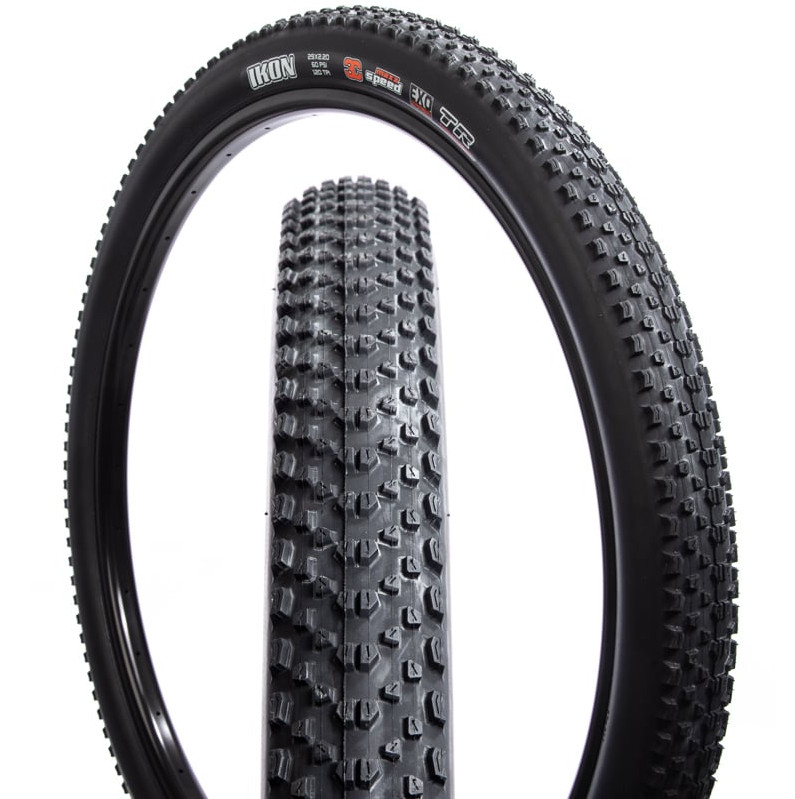
Maxxis Ikon 2.4 MaxxSpeed
Lightweight XC tire with predictable grip and low rolling resistance.
Read the review →