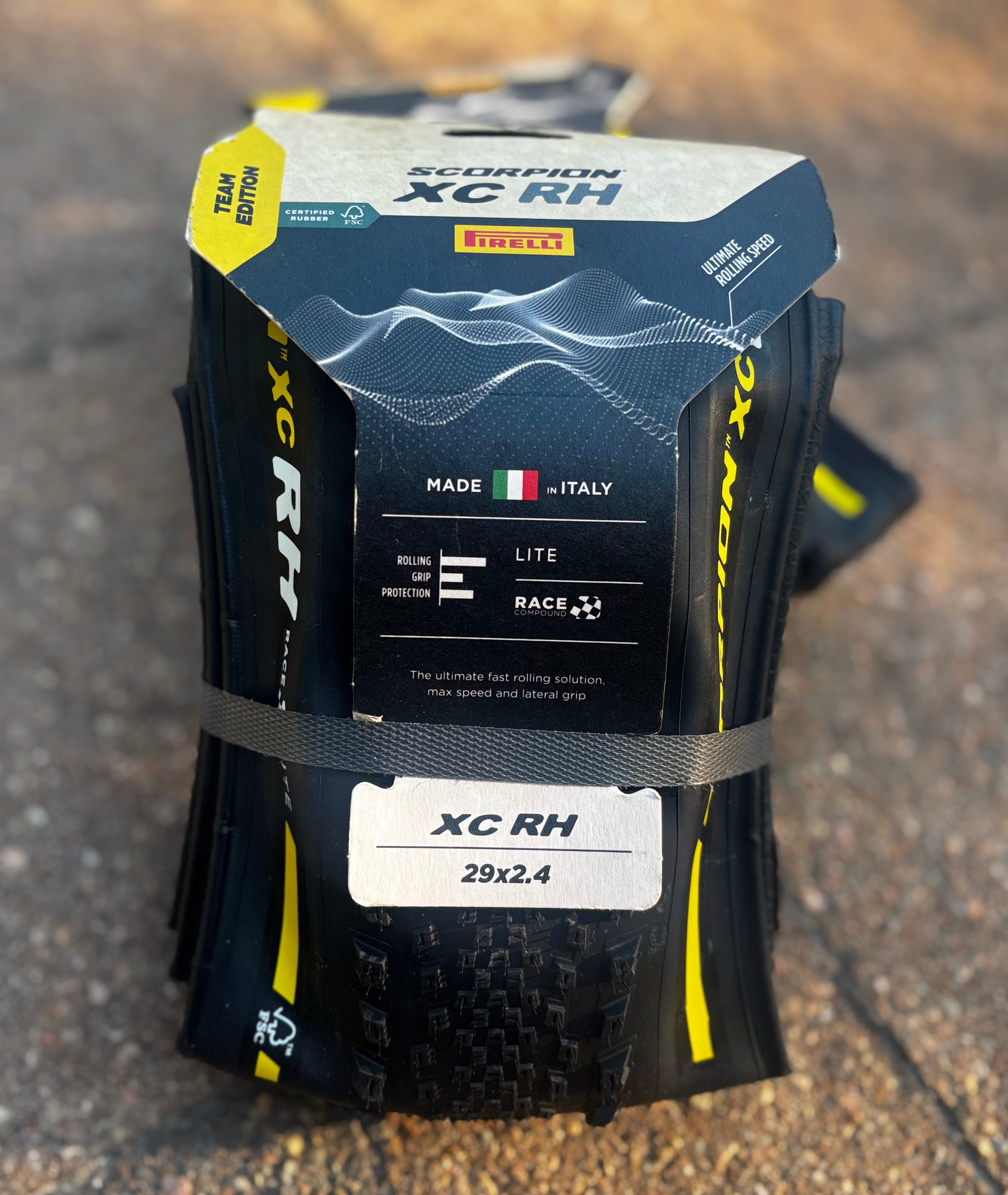
Pirelli Scorpion XC RH 2.4
The fastest true 2.4-inch MTB tire I've ridden (as of 8.1.26), built for dry, less-technical courses where outright efficiency matters more than braking and cornering.
Why I Like It
The Pirelli Scorpion XC RH is, by a large margin, the fastest true 2.4-inch mountain bike tire I’ve ever ridden. It carries an impressive rolling-resistance number in a laboratory that any rider can immediately notice on the bike.
My first experience with these was during threshold workouts climbing familiar service roads around Vail. The Pirellies just seemed to keep driving uphill with less resistance than any other tire I’ve ridden. They accelerate quickly, hold speed exceptionally well, and make smooth sections feel almost unfair.
There’s no free lunch, though.
The RH creates that speed in part with an extremely low center tread, limited braking traction, and almost no transition between the center and shoulder knobs. It isn’t a balanced, all-around XC tire. It’s a specialized race tire for long, dry, less-technical courses where efficiency matters more than braking and cornering.
When a course lands in the sweet spot of this tire, it’s exceptional.
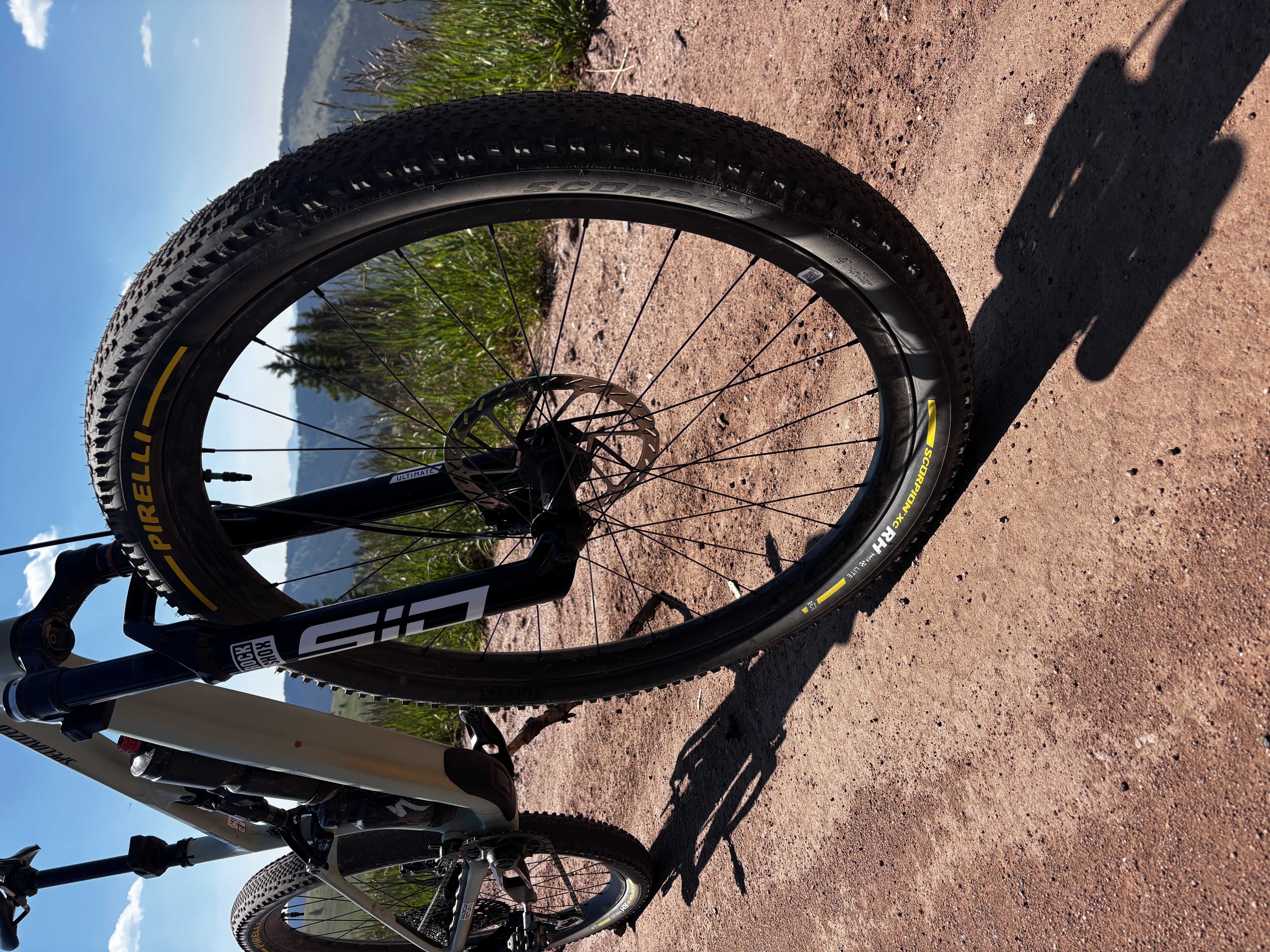
Disclosure: Pirelli provided the XC RH Race LITE tires for testing. I liked them enough that I personally purchased the ProWALL version to race at the Black Forest Ultra. As always, this review is based on my own testing and impressions.
Quick Specs
- Models tested:
- Race LITE Edition 29×2.4
- Race ProWALL Edition 29×2.4
- Measured LITE weights: 639g / 632g
- Measured ProWALL weights: 675g / 672g
- Measured width: 2.402 inches
- Casing: 120 TPI
- Compound: Race Compound
- Rim width: 29mm internal
- Pressures: 14 PSI front / 15 PSI rear
- Inserts: Vittoria Air-Liner Light front and rear
- Best conditions: dry
- Best terrain: pavement, hardpack, gravel roads, smooth trail, and open descending
- Best for: less-technical XC and marathon racing
All four of my tires came in exceptionally light. The LITE pair averaged about 636g, while the ProWALL pair averaged about 674g making the ProWALL tires only around 38g heavier per tire. A pretty small penalty for the additional sidewall protection.
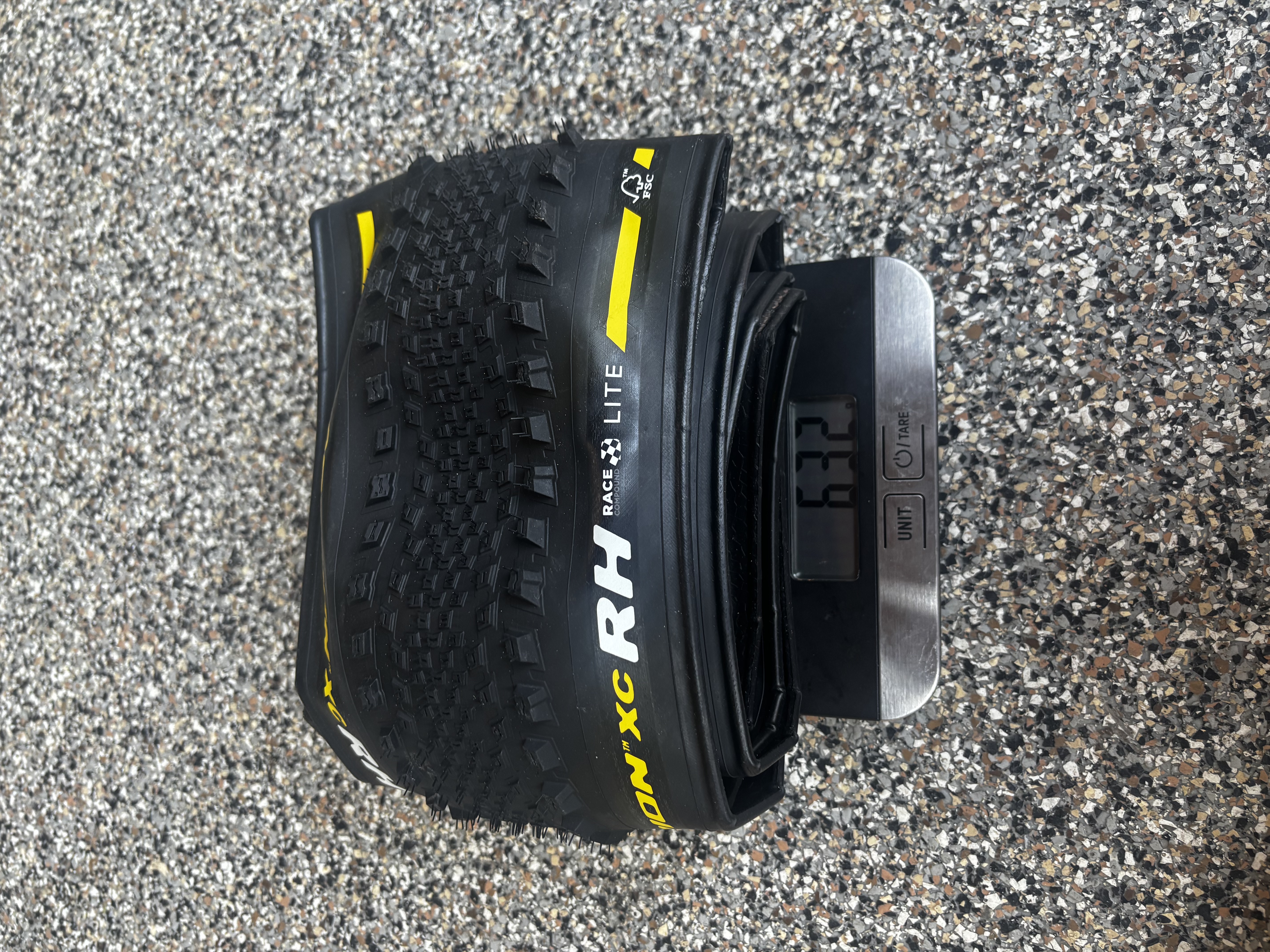
One of my Race LITE samples at 632g.
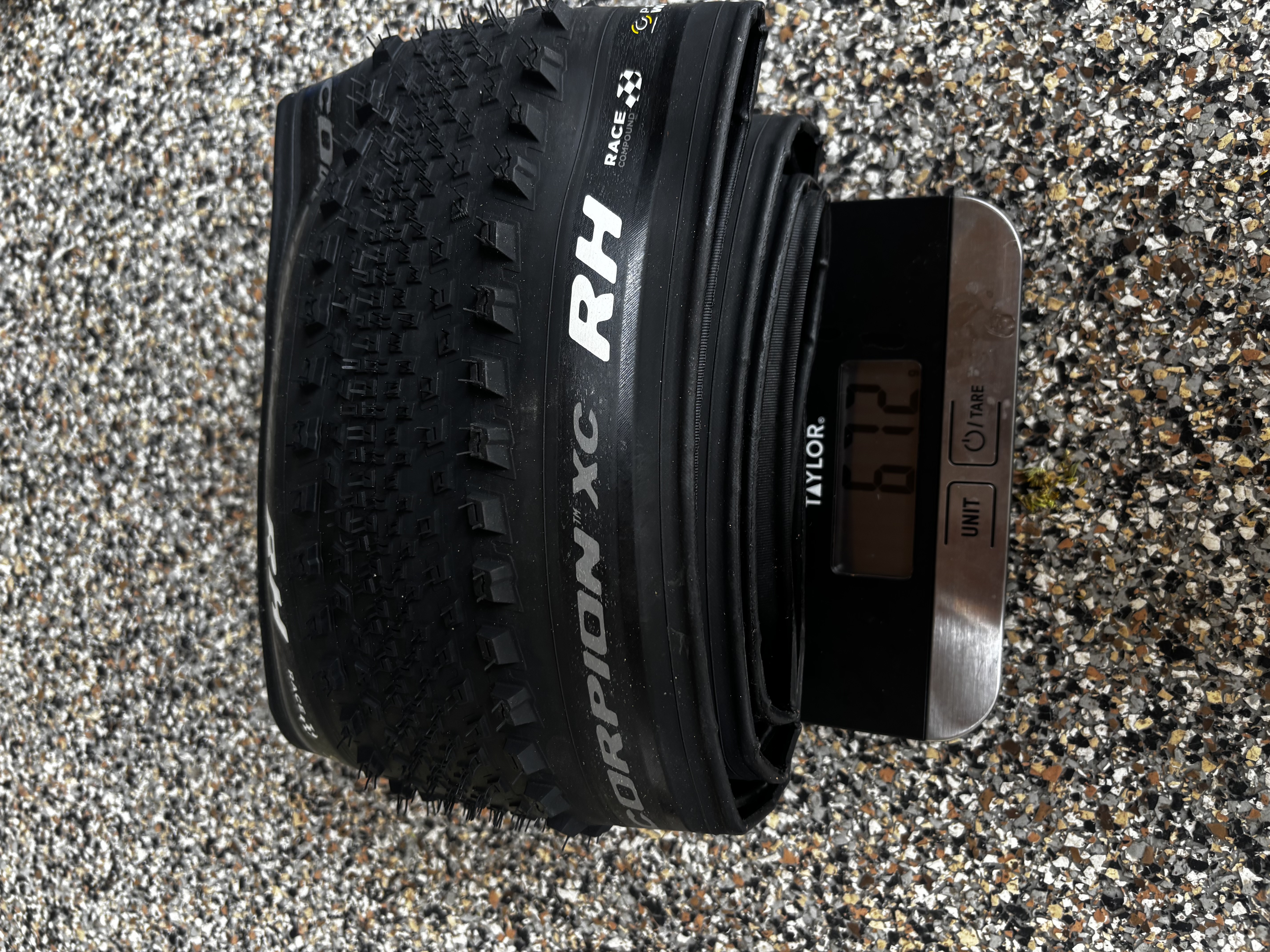
One of my ProWALL samples at 672g.
In My Setup
- XC RH 2.4 front and rear
- Bike: Specialized Epic 8 ↗️
- Wheels: Roval Control, 29mm internal
- Inserts:
 Vittoria Air-Liner Light inserts ↗️
 - Pressures: 14 PSI front / 15 PSI rear
- System weight (rider + bike + gear): approximately 86kg
- LITE testing: approximately 20–25 hours
- ProWALL testing: approximately 15 hours (incl. 6.5hrs of racing)
I tested the LITE version around Vail during threshold workouts up the ski-mountain service roads, descending bike park trails, longer backcountry endurance loops, and some legitimately rowdy, dry descending. I also raced the ProWALL version at the Black Forest Ultra.
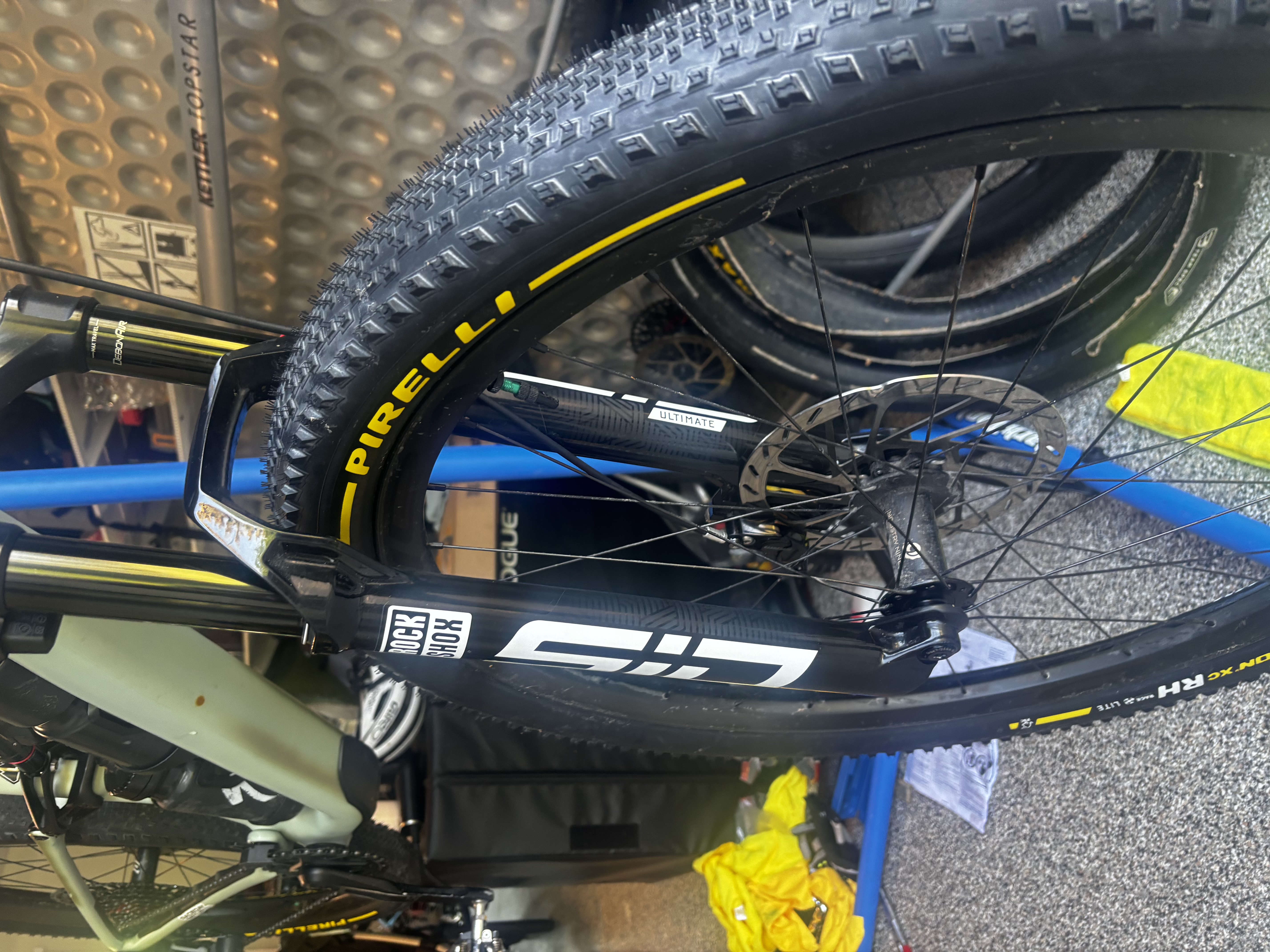
Front tire setup on my Epic 8.
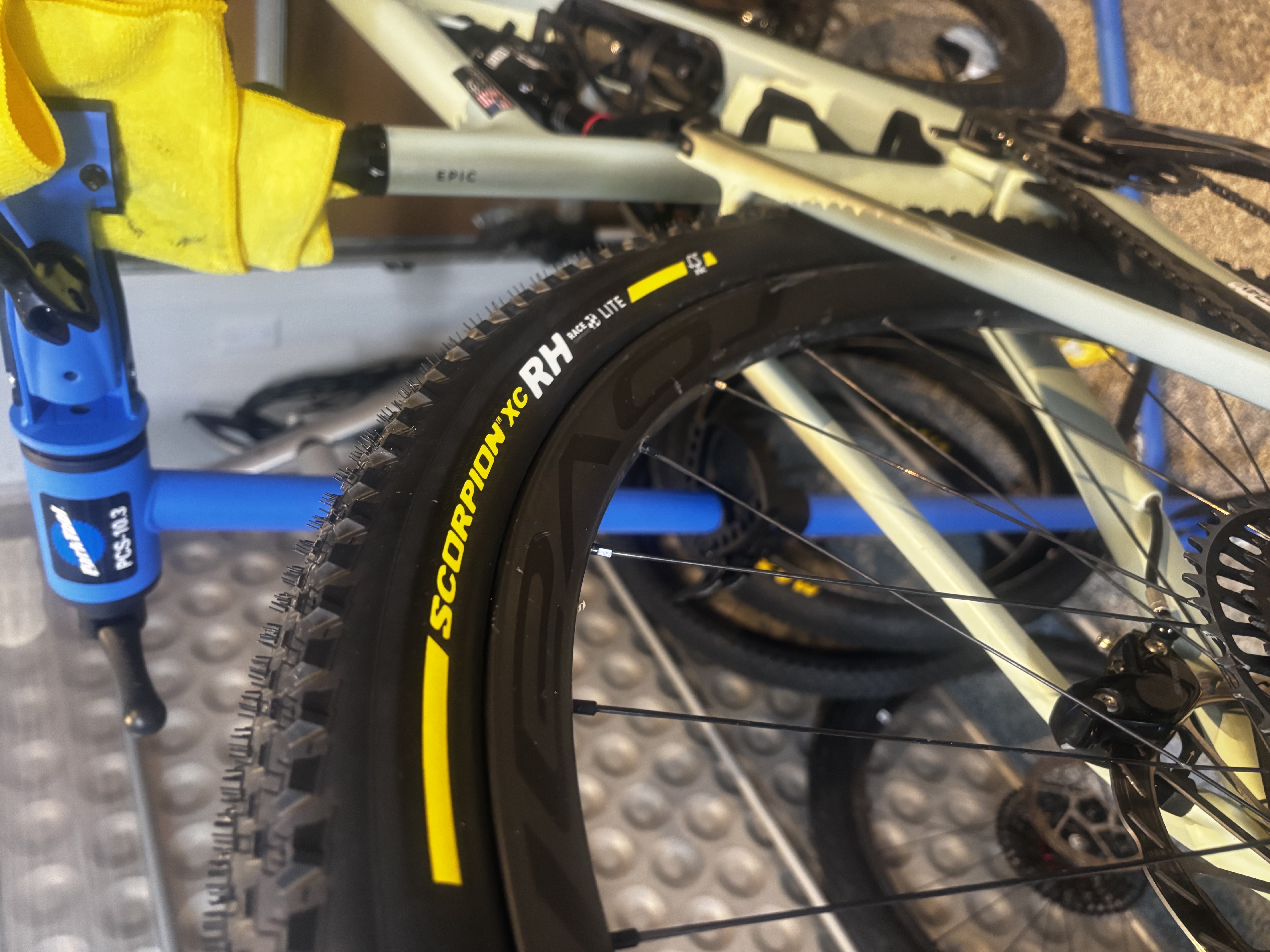
Rear tire setup on the same bike.
Rolling Speed
The primary reason to reach for this tire.
The XC RH feels noticeably faster than any other full-width 2.4-inch MTB tire I’ve ridden. The difference is most obvious on fast pavement and smooth hardpack, but I could also feel it while climbing and accelerating out of slower sections.
The lab results were what originally got my attention. Bicycle Rolling Resistance measured the RH LITE at 16.7 watts per tire under its current low-pressure MTB protocol.
For comparison, the Schwalbe Rick XC Pro Speed measured at an already blistering fast 19.0 watts. The Pirellis were 2.3 watts faster per tire in that test. The newer 2.35-inch Thunder Burt Super Race came much closer at 17.3 watts, leaving the Pirelli still slightly faster while also measuring as a true 2.4-inch tire.
Here’s how the RH stacks up against some other fast XC tires:
| Tire | Weight (g) | RR @ BRR Low Pressure ↗️ | Casing |
|---|---|---|---|
 Pirelli Scorpion XC RH ↗️ Pirelli Scorpion XC RH ↗️ | 637 | 16.7w | LITE |
| Schwalbe Thunder Burt ↗️ | 701 | 17.3w | Super Race |
| Schwalbe Rick XC ↗️ | 768 | 19.0w | Pro Speed |
| Schwalbe Racing Ralph ↗️ | 758 | 19.0w | Super Ground |
| Schwalbe Racing Ray ↗️ | 748 | 19.3w | Super Race |
| Continental Dubnital ↗️ | 635 | 20.6w | Race Rapid |
| Vittoria Peyote XC Race ↗️ | 720 | 21.3w | XC Race |
Weights shown are measured test weights from Bicycle Rolling Resistance. RR values come from its low-pressure MTB protocol, and some of these tires are narrower 2.35-inch models.
I haven’t personally ridden the latest Thunder Burt, so I can’t compare performance but it seems to be the only tire on the market that competes with the XC RH in terms of rolling speed.
Ride Feel
The LITE casing feels exceptionally thin and supple in your hands. The ProWALL is noticeably thicker through the sidewall and feels slightly firmer on the trail, but the overall difference in ride quality isn’t dramatic.
The LITE version felt marginally faster and smoother to me, although the difference was small enough that it could have just been mental.
They remain stable when hitting rocks at speed as long as you aren’t simultaneously asking them to brake hard or change direction aggressively. Unsurprisingly, the tire feels limited when that rough terrain requires braking, maneuvering, or frequent corrections.
In a straight, committed line, both versions feel supple, stable, and fast.
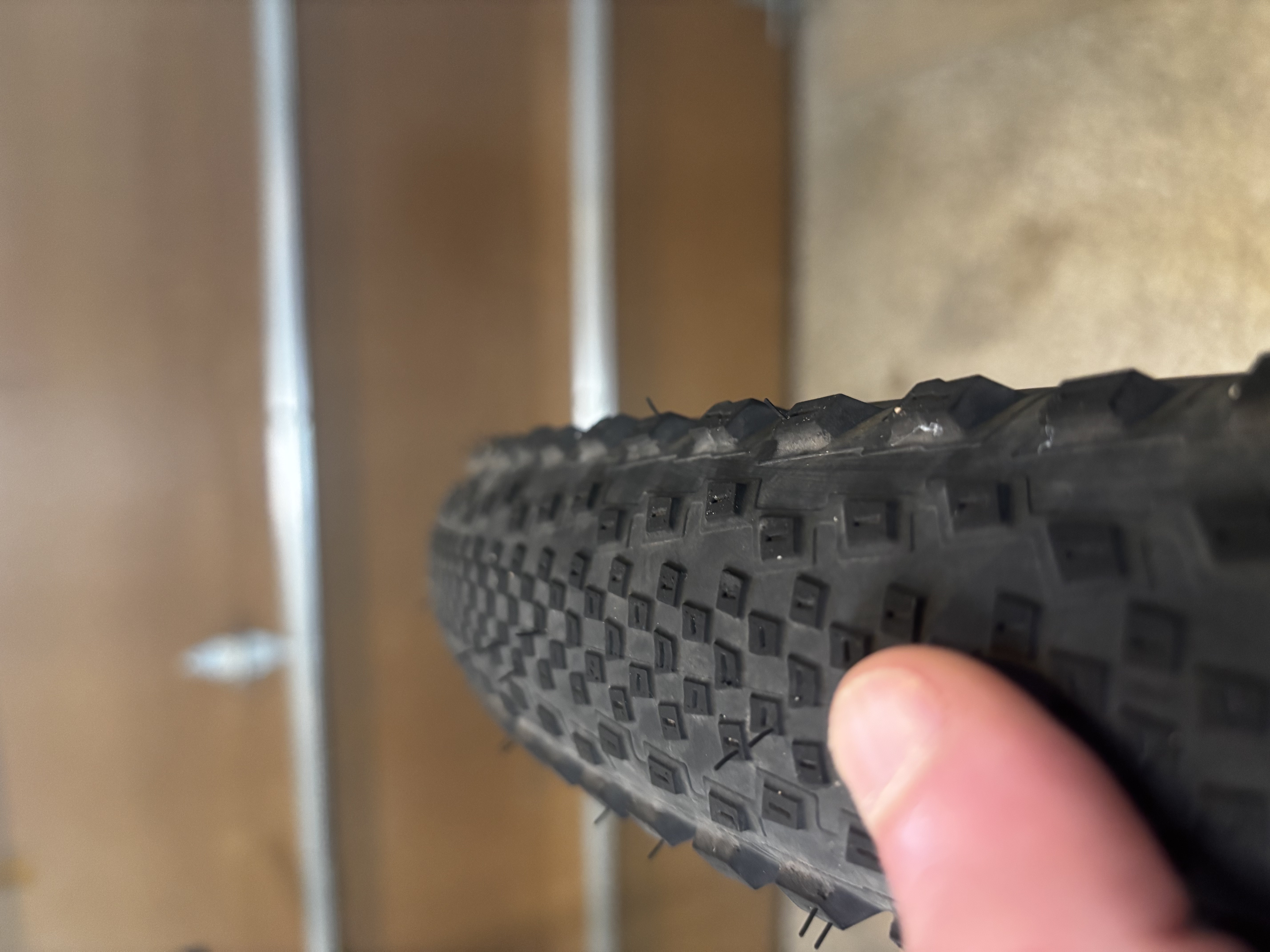
The low center tread is a big part of why this tire feels so quick.
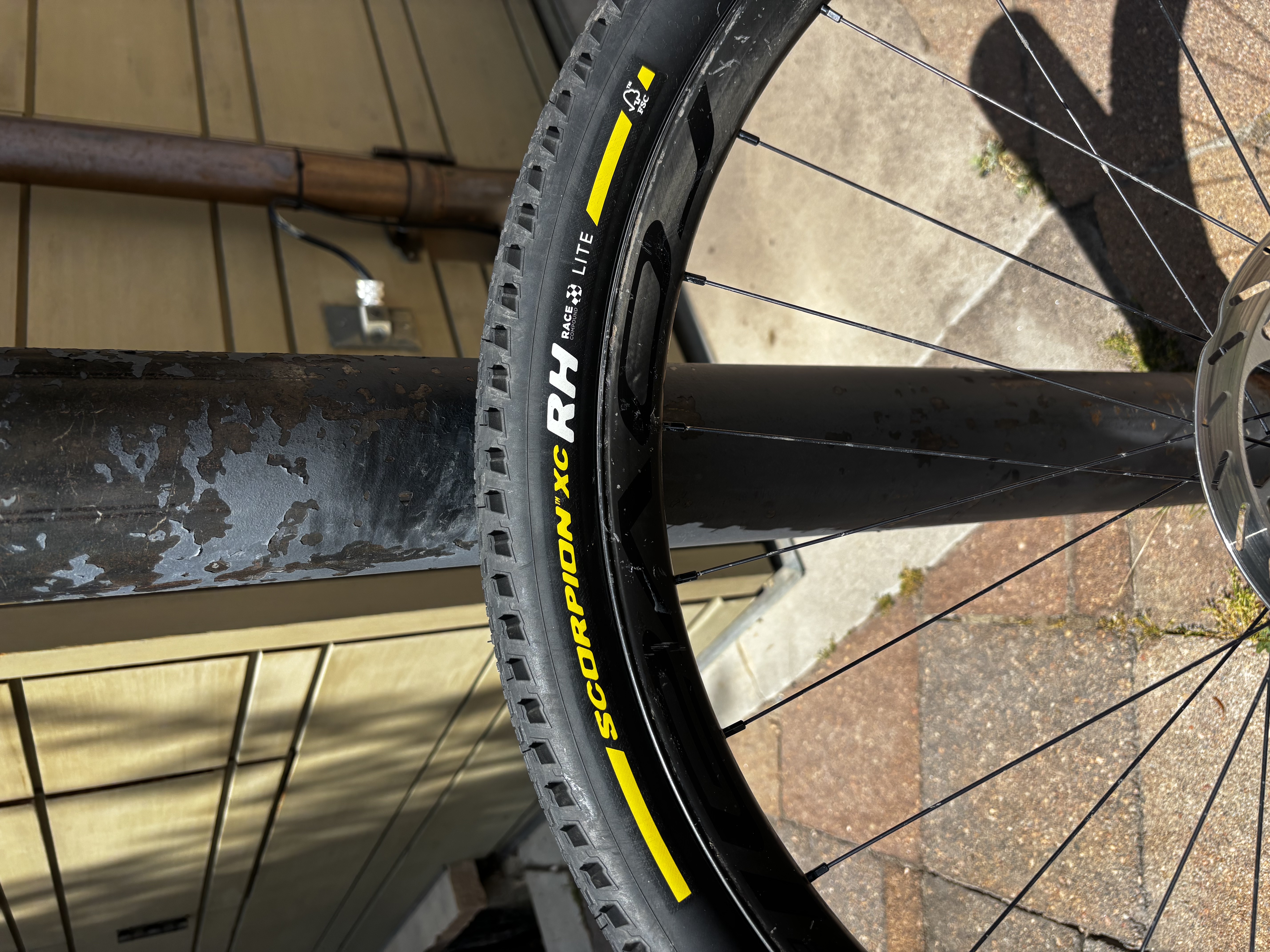
The LITE casing feels impressively thin and supple in hand.
Climbing Traction
Climbing traction is better than the nearly slick center tread might suggest, particularly at the low pressures I was running.
On normal dry climbs, the RH digs in pretty well. I rarely experienced meaningful rear-wheel spin, and I only spun it once during the Black Forest Ultra on a short, technical climb. Even then, it didn’t cost enough momentum to force me off the bike.
For a tire this fast, its climbing performance is adequate. It isn’t a tire I’d select specifically for technical climbing grip, but climbing was never a major weakness during my testing.
Braking Traction
This is where you start paying for the ultra-low center tread.
The center of the RH is nearly slick, and braking traction is limited, particularly when loose rocks or gravel sit on top of a hard surface.
On clean hardpack with only a light layer of dust, braking traction is there. If there’s a lot of loose rock, the lack of bite becomes much more obvious and it takes a bit of mental energy to manage.
You need to:
- brake earlier
- reduce speed gradually
- avoid too much brake while leaned over
- get some experience with how this tire moves underneath you
I did find the sliding to be generally more gradual rather than sudden. I had fun letting the rear move around, releasing the brake, and allowing it to hook back up. The tire didn’t frequently surprise me, but I was always conscious of what I was riding and adjusted my braking accordingly.
Braking traction is roughly comparable to what I’ve experienced from an Aspen ST (but rolls much faster). That’s an expected tradeoff, but it’s the RH’s clearest limitation.
Cornering
The more tight or tricky corners a descent contains, the more time the RH could cost you.
The shoulder knobs are pretty significant but there’s nothing in between. Once you fully commit and get the bike onto them, they provide real support and will catch you.
The lack of transition support made the RH entertaining on loose trails. I tend to feather the rear around corners when I don’t get my entry speed exactly right. I could let the rear move, release the brake, and allow the tire to hook back up on the exit.
I did have to hold back on familiar descents with lots of tight corners. I could still put up respectable times, but I wasn’t descending as quickly as I could on an Aspen, Rush, Rick XC, Rekon Race, or another more versatile XC tire.
Race Tested: The Black Forest Ultra
I chose the ProWALL casing for the Black Forest Ultra because I’d traveled all the way to Germany and didn’t want a big rip in the sidewall ending the race.
The course covered approximately 118 kilometers with 3,550 meters of climbing, or around 73.3 miles and 11,650 feet.
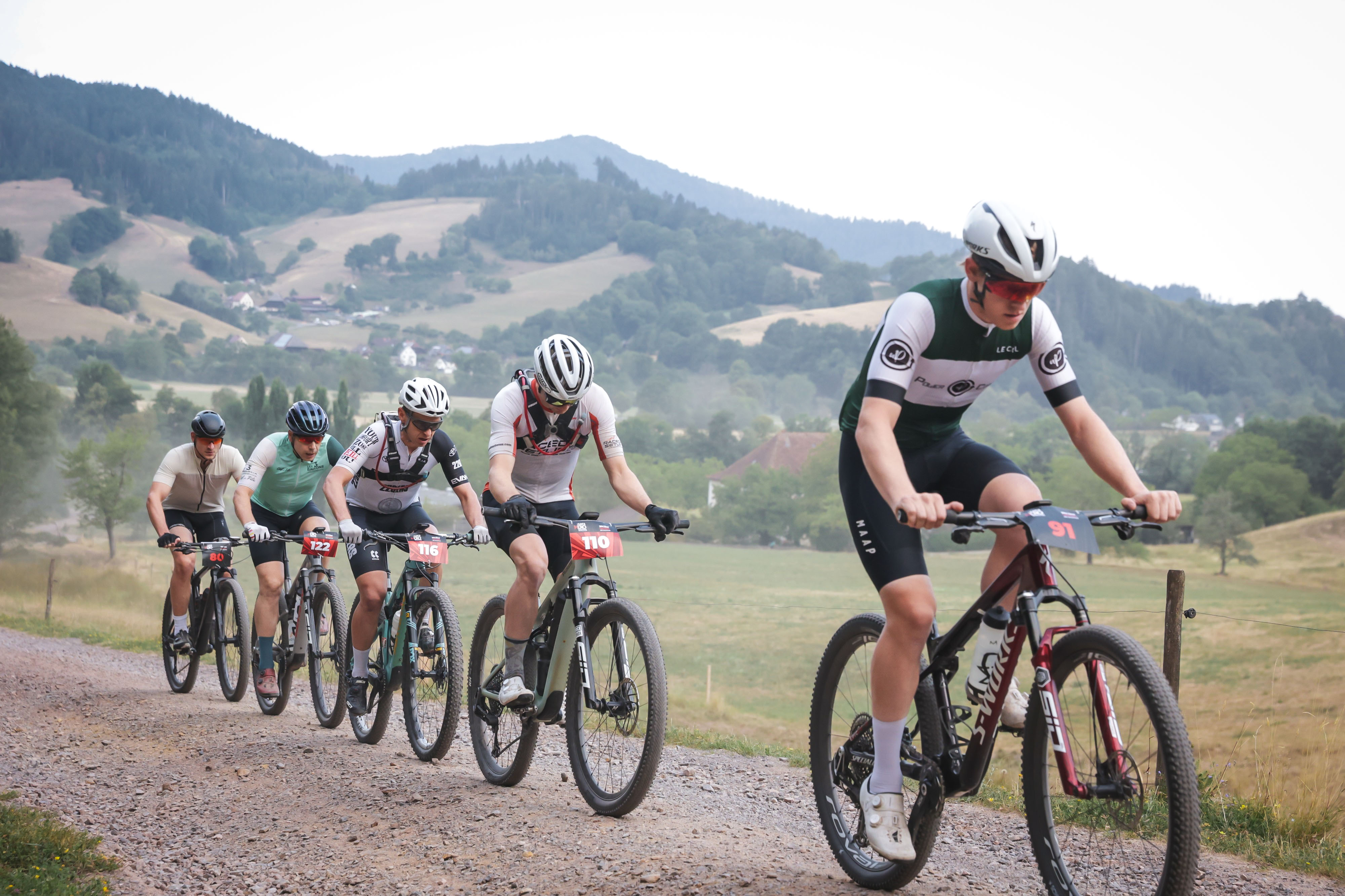
It consisted largely of gravel and forest roads, with some pavement, grass, and sections of legitimately technical singletrack. I had a spare wheelset with me set up conservatively with Ikon front / Aspen rear in case of a wet race but conditions were completely dry, making it an excellent course for the XC RH.
The course also included rocky technical trail and some deep moon-dust singletrack corners near the finish. The tires moved around substantially in those sections, but they remained very manageable.
I actually loved ripping the course’s singletrack on them. Riding a slightly under-tired setup made those sections lively and fun, and I never found myself regretting the choice.
Many of the fast gravel road descents had long, wide corners covered in piles of loose, golf-ball-sized granite. The tires didn’t hold me back on these descents whatsoever - they just gave a little less margin for line choice mistakes that require sudden corrections.
I had a crash during the race on a blistering, loose descent where I misjudged my exit speed through a corner and clipped a drainage pipe on the edge of the road. Not the tire’s fault, just a mistake descending on the limit with a tired brain.
LITE vs. ProWALL
The two versions have the same dimensions and tread profile, but there are clear differences in construction.
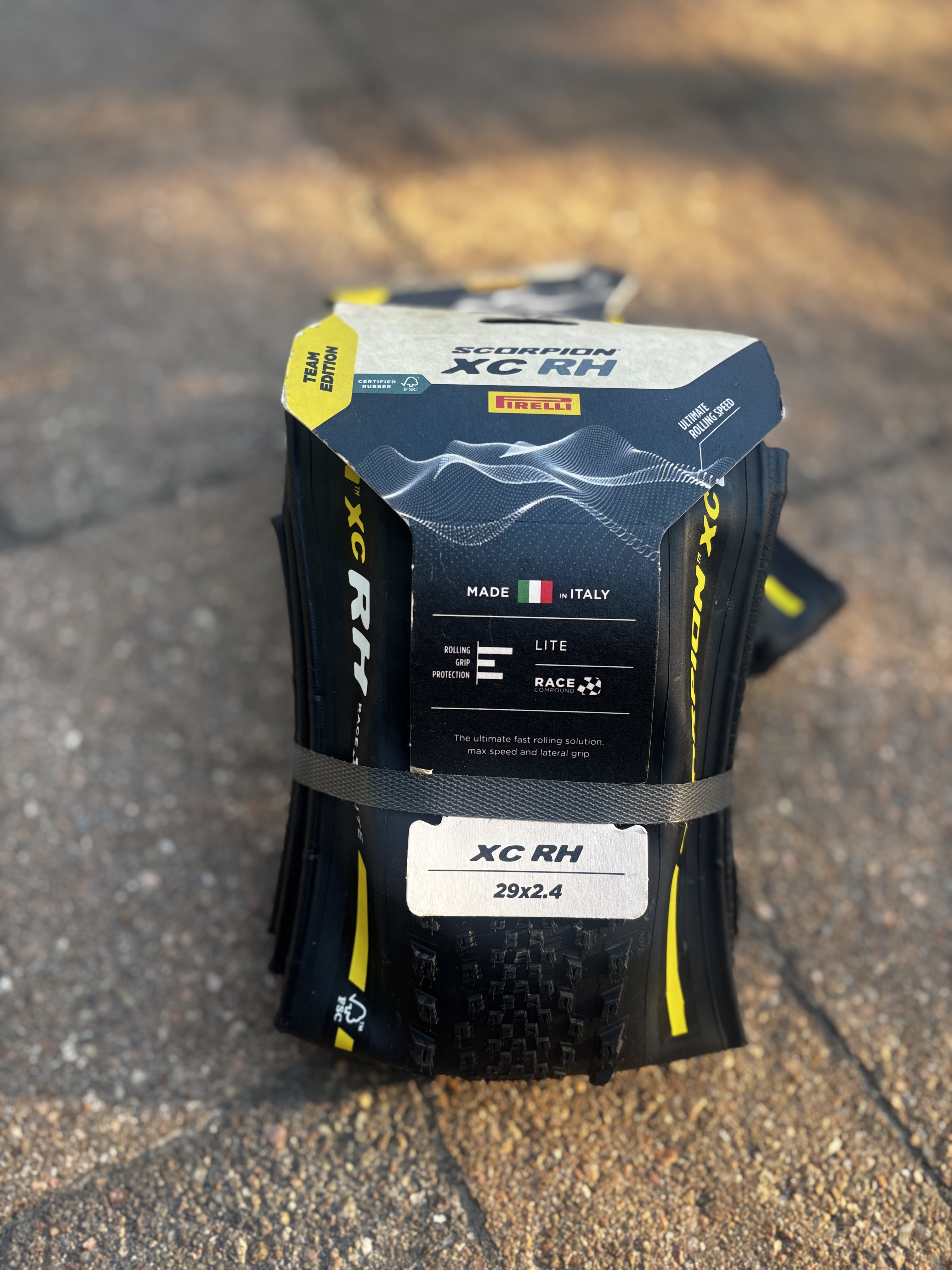
Race LITE Team Edition.
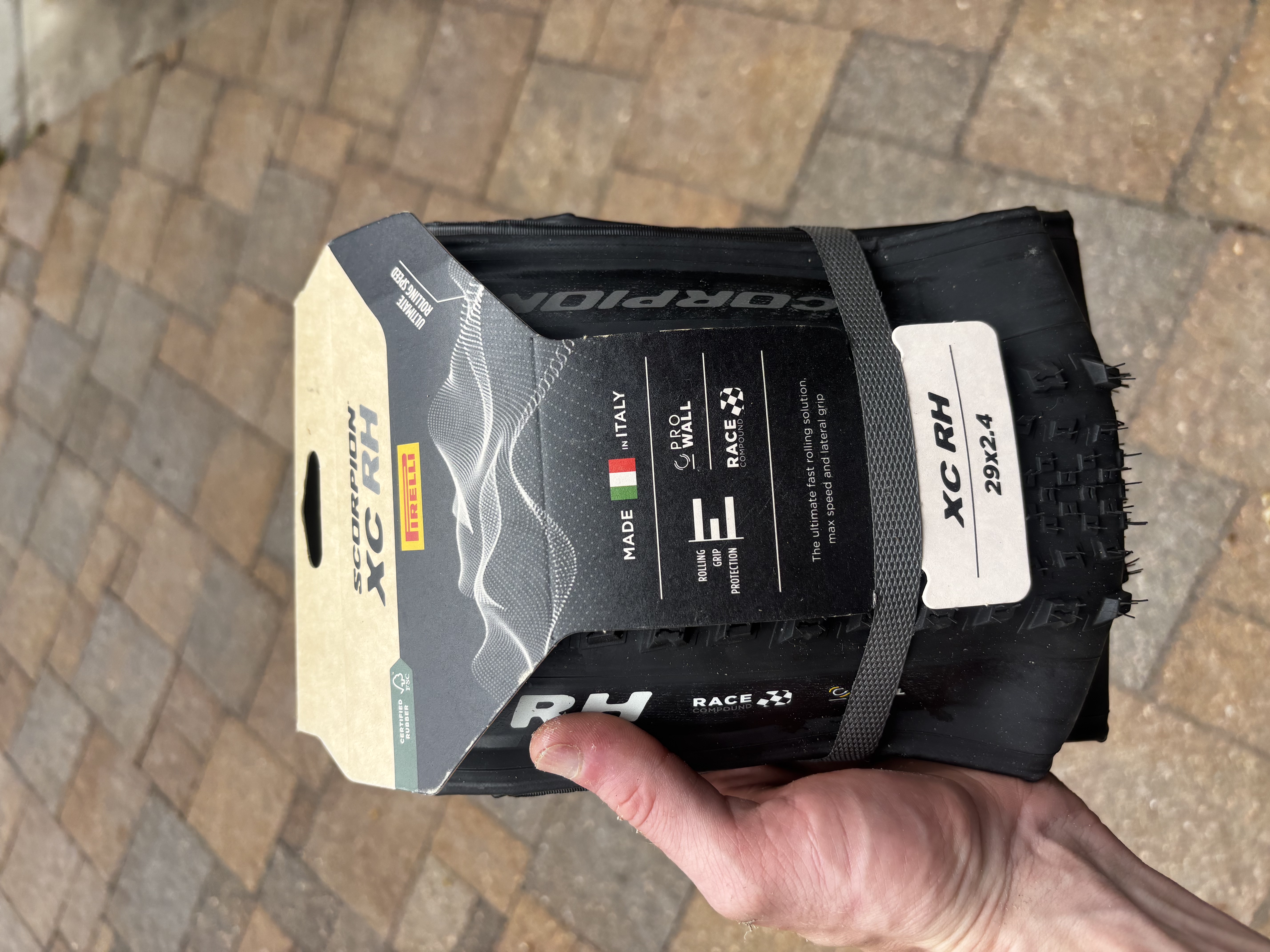
Race ProWALL Edition.
Race LITE Team Edition
- Measured weights: 632g / 639g
- Extremely thin and supple sidewalls
- Slightly smoother and more responsive ride
- Best for courses where weight and rolling speed take priority
- My choice for races like the Sea Otter Fuego XL
Race ProWALL Edition
- Measured weights: 672g / 675g
- Approximately 36–40g heavier per tire than my LITE samples
- Noticeably thicker sidewalls
- Slightly firmer and maybe marginally slower
- Still extremely fast compared with nearly any MTB tire
- Better for long, rocky races, unknown terrain, or significant risk of sidewall damage
- My current first choice for a dry Leadville 100
The LITE sidewalls feel remarkably thin when you’re handling the unmounted tire. The ProWALL construction feels much more substantial.
On the trail, the difference wasn’t nearly as dramatic as the unmounted tires suggested. The LITE was a little more supple, and it may have felt slightly quicker, but the ProWALL was still blazing fast.
The ProWALL decision at Black Forest was conservative. I likely could’ve gotten away with the LITE tires, but I had no interest in gambling an international race trip to save 40 grams per tire.
I wouldn’t hesitate to make the same choice again.
Durability and Wear
Both casings have been more durable than I expected.
I deliberately pushed the LITE tires well beyond what I initially considered their obvious sweet spot. I used them on Vail bike park descents, rocky backcountry loops, and terrain where I fully expected to eventually put a hole in the tread or sidewall. They shrugged it off.
I had:
- no punctures
- no sidewall cuts
- no exposed casing threads
- no knob tearing
- no burping
- no unusual pressure loss
The center tread barely exists when the tire is new, but I haven’t seen meaningful wear. Because the knobs are so low, they don’t appear to experience the same leverage and tearing forces as taller tread blocks.
Mounting
I generally avoid placing too much emphasis on tire installation because rim and tire tolerances vary, and mounting difficulty has no effect on performance.
That said, the beads on all four RH tires were particularly tight.
I needed a tire lever to get even the first bead onto the rim and, unsurprisingly, needed one again for the second. Anyone with decent experience mounting tubeless tires should find the job just marginally more difficult than usual.
Best Uses
The RH front and rear makes the most sense for:
- long, dry marathon races
- races with substantial pavement or gravel roads
- open descending with relatively few tight corners
- riders pursuing every available advantage in rolling resistance and weight
The LITE is especially compelling when the course is smooth enough that tire damage is unlikely. Fuego XL at Sea Otter is a nearly perfect example. The terrain isn’t especially threatening to a lightweight casing, and the race heavily rewards speed and efficiency.
The ProWALL makes more sense when the course is still fast but includes enough rocks or unknown terrain that the added protection is worth the additional 30–40 grams per tire.
If Leadville is dry, the XC RH ProWALL is currently my number-one tire choice with the 2.35-inch Thunder Burt being the closest alternative.
As a Rear Tire
The RH is especially compelling as a rear tire.
Pairing it with a more aggressive Pirelli XC RC—or another fast, all-around XC front tire—would preserve much of the rolling resistance advantage while improving braking and cornering.
For moderately technical, dry marathon races, an XC RC front and XC RH rear could be an excellent setup.
Not sure if the XC RH is the right tire?
Use the RaceDaySetup Tire Selector to get personalized recommendations based on terrain, riding style, and your goals.
Try the Tire Selector →Final Verdict
The Pirelli Scorpion XC RH is not trying to be a versatile XC tire. It’s trying to be extraordinarily fast, and it succeeds.
It carries momentum better than any true 2.4-inch MTB tire I’ve ever ridden, accelerates effortlessly, and can save meaningful energy during a long race. It’s also sturdier and a bit more technically capable than its minimal tread initially led me to expect.
Braking traction is limited, there’s almost no transition onto the shoulder knobs, and repeated loose corners can erase the time and energy gained elsewhere if you reach for it on the wrong course.
Deal Finder
Where to buy
Related Gear
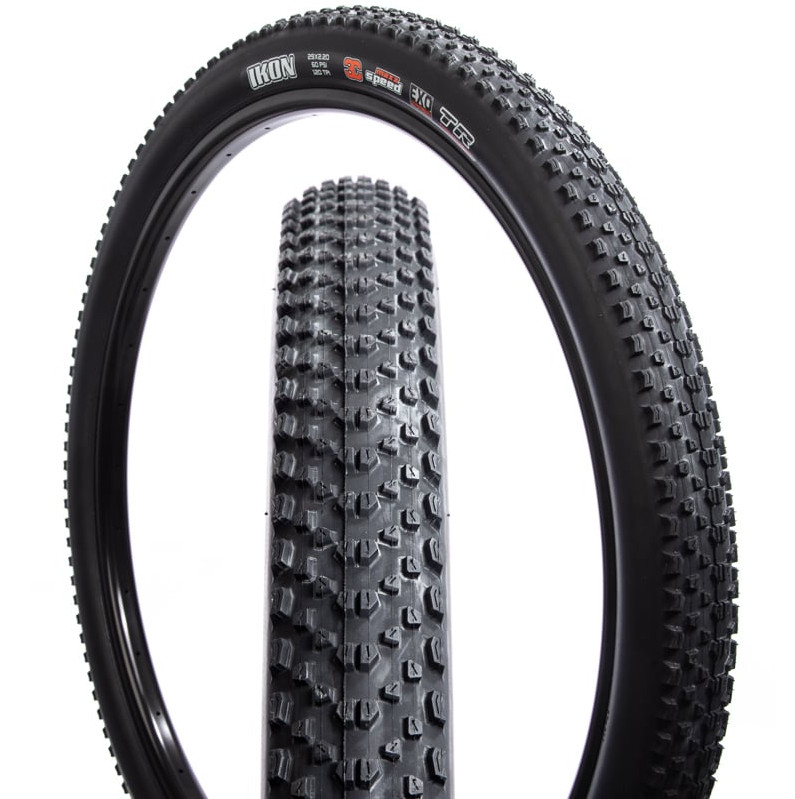
Maxxis Ikon 2.4 MaxxSpeed
Lightweight XC tire with predictable grip and low rolling resistance.
Read the review →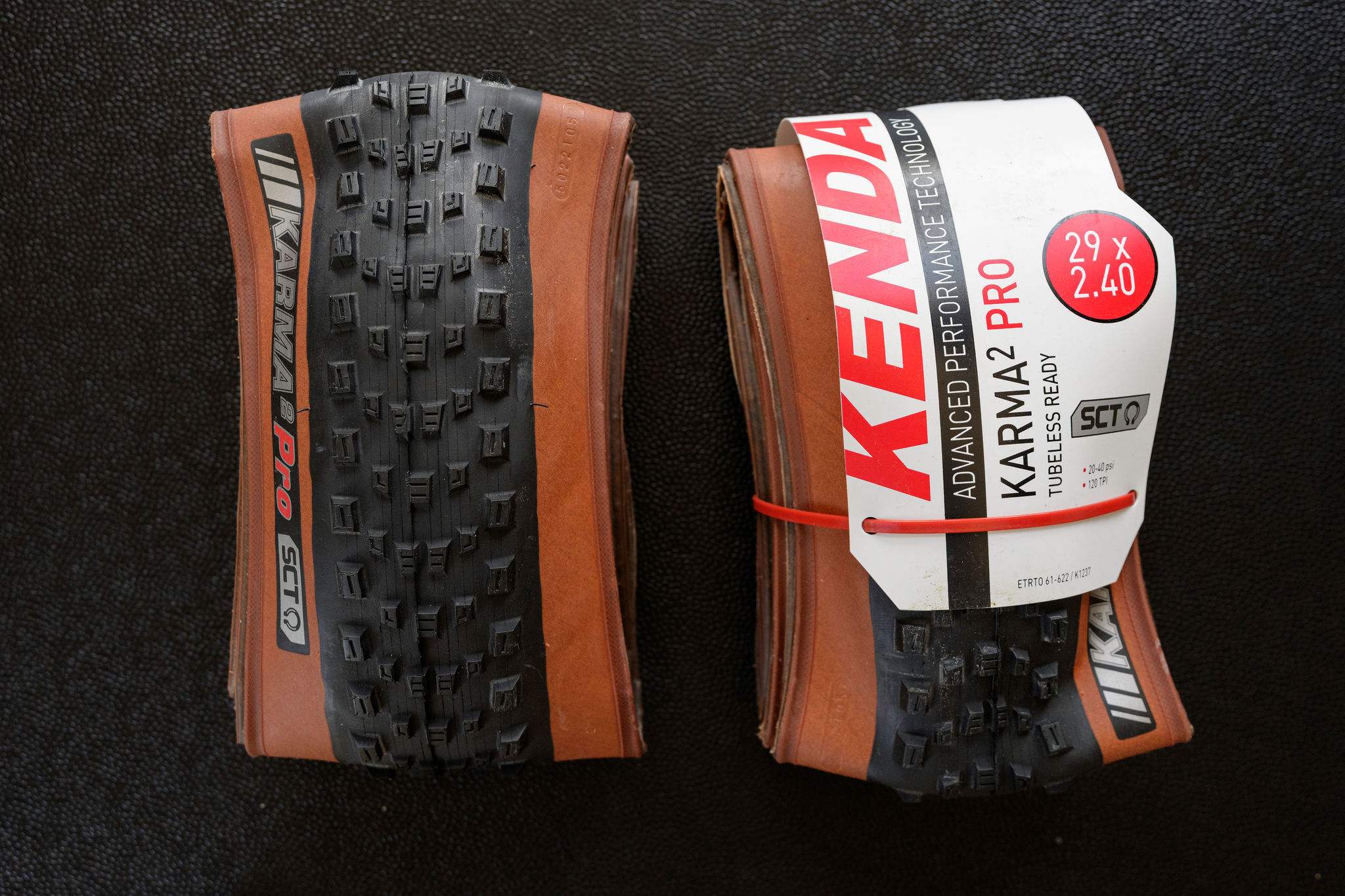
Kenda Karma 2 Pro 2.4 SCT
A high-traction wet and gnarly terrain XC tire that delivers unmatched confidence when the trail turns slick, rough, and technical.
Read the review →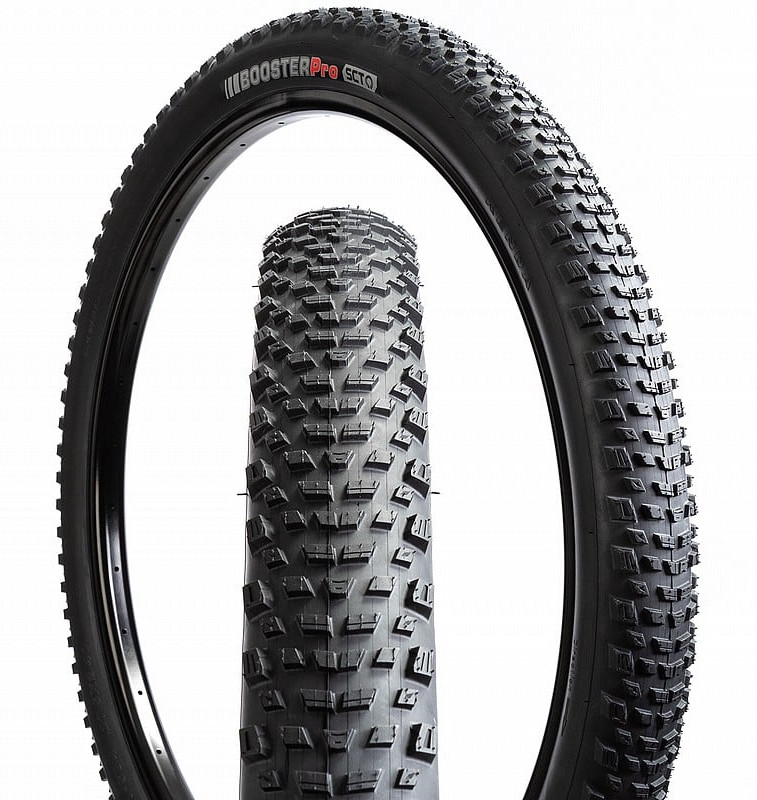
Kenda Booster Pro 2.4 SCT (120 TPI)
XC race tire with aggressive knobs and SCT protection — a lighter, confident alternative to the Maxxis Ikon.
Read the review →