RockShox Reverb AXS Dropper
RockShox Reverb AXS Review - ditching the cable and going wireless.
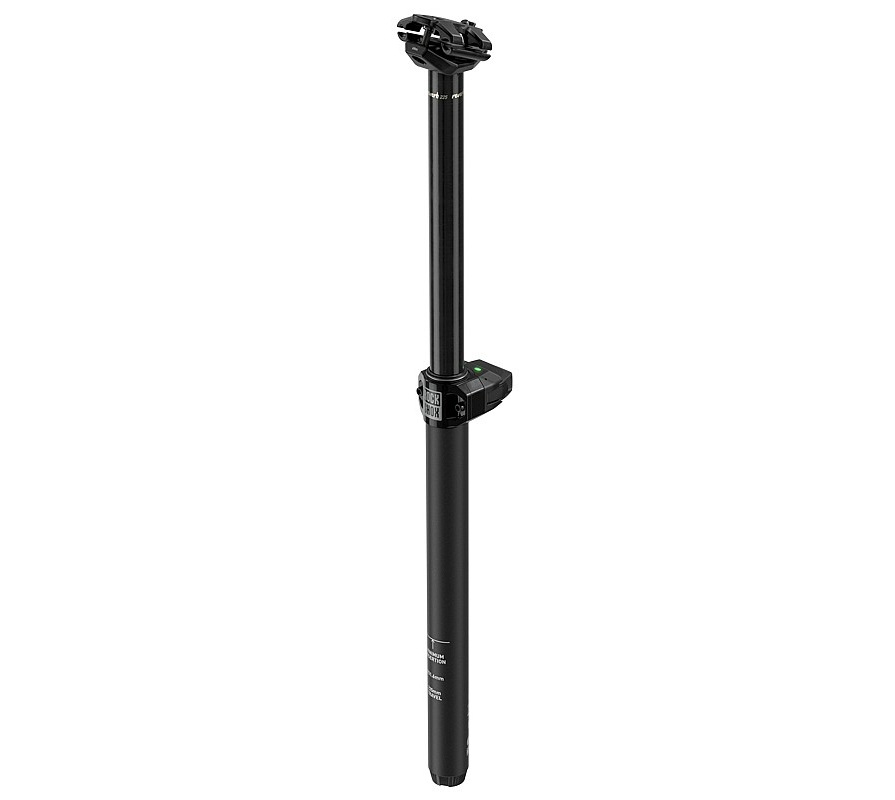
RockShox Reverb AXS
I was seriously skeptical about wireless droppers. They’re expensive and they didn’t seem to be solving any real issue I was having. At least that was the case until I killed two Fox Transfers in less than two years and decided to take the plunge.
The new AXS Reverb Droppers come with a lower price tag than the previous generation and boast home serviceability. After putting about 40 hours on my new AXS Reverb on my Epic 8, I’m very happy with it. Actuation is fast, top-out is consistent, setup was easy, and I am very happy to be done with internal dropper cable routing on this bike.
Quick Specs
| Bike | Specialized Epic 8 EVO Pro |
| Post |  RockShox Reverb AXS ↗️ , 30.9mm x 150mm RockShox Reverb AXS ↗️ , 30.9mm x 150mm |
| Previous post | Fox Transfer, cable actuated |
| Controller | SRAM AXS Pod Controller ↗️ on the left side |
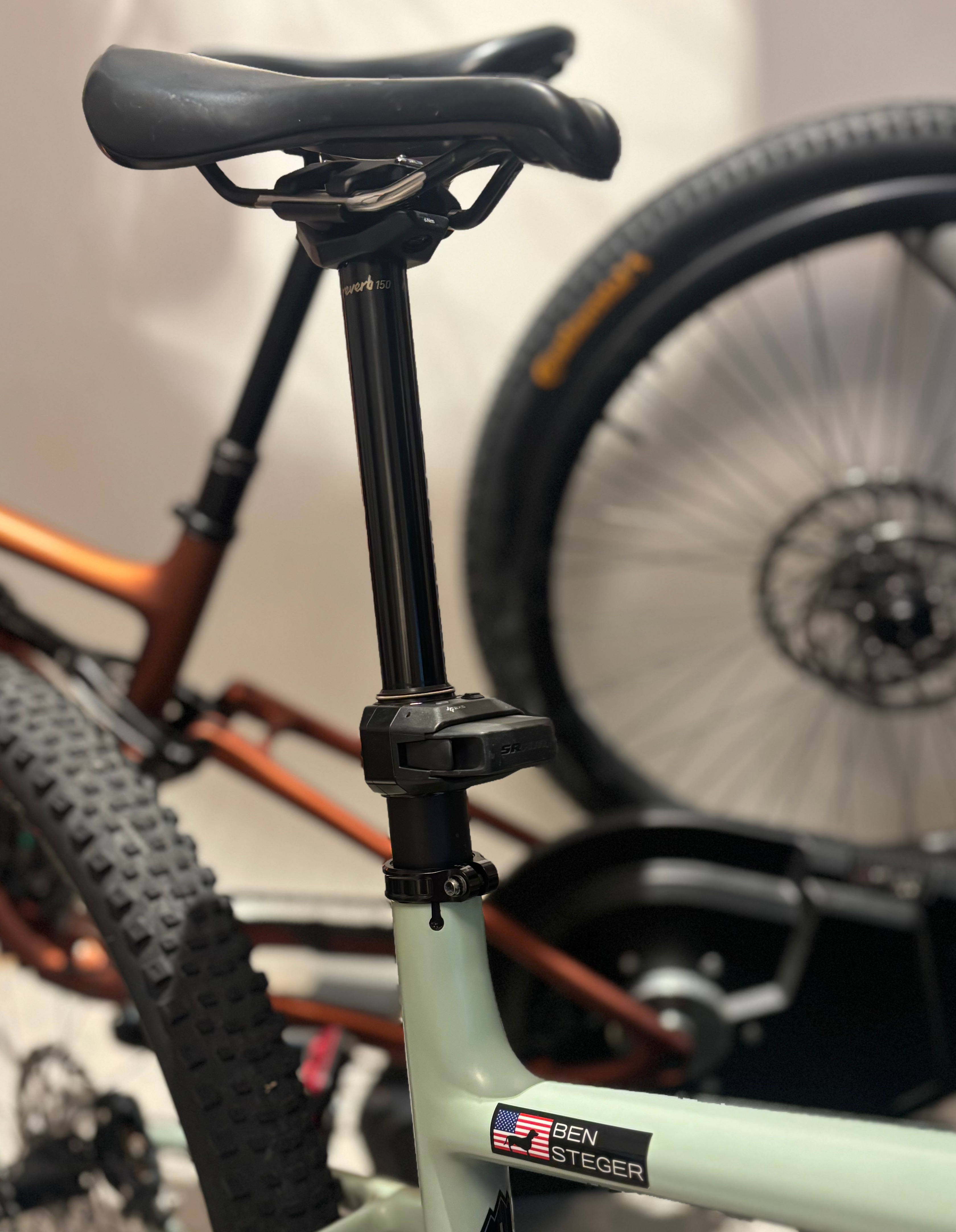
The Reverb AXS installed on my Epic 8.
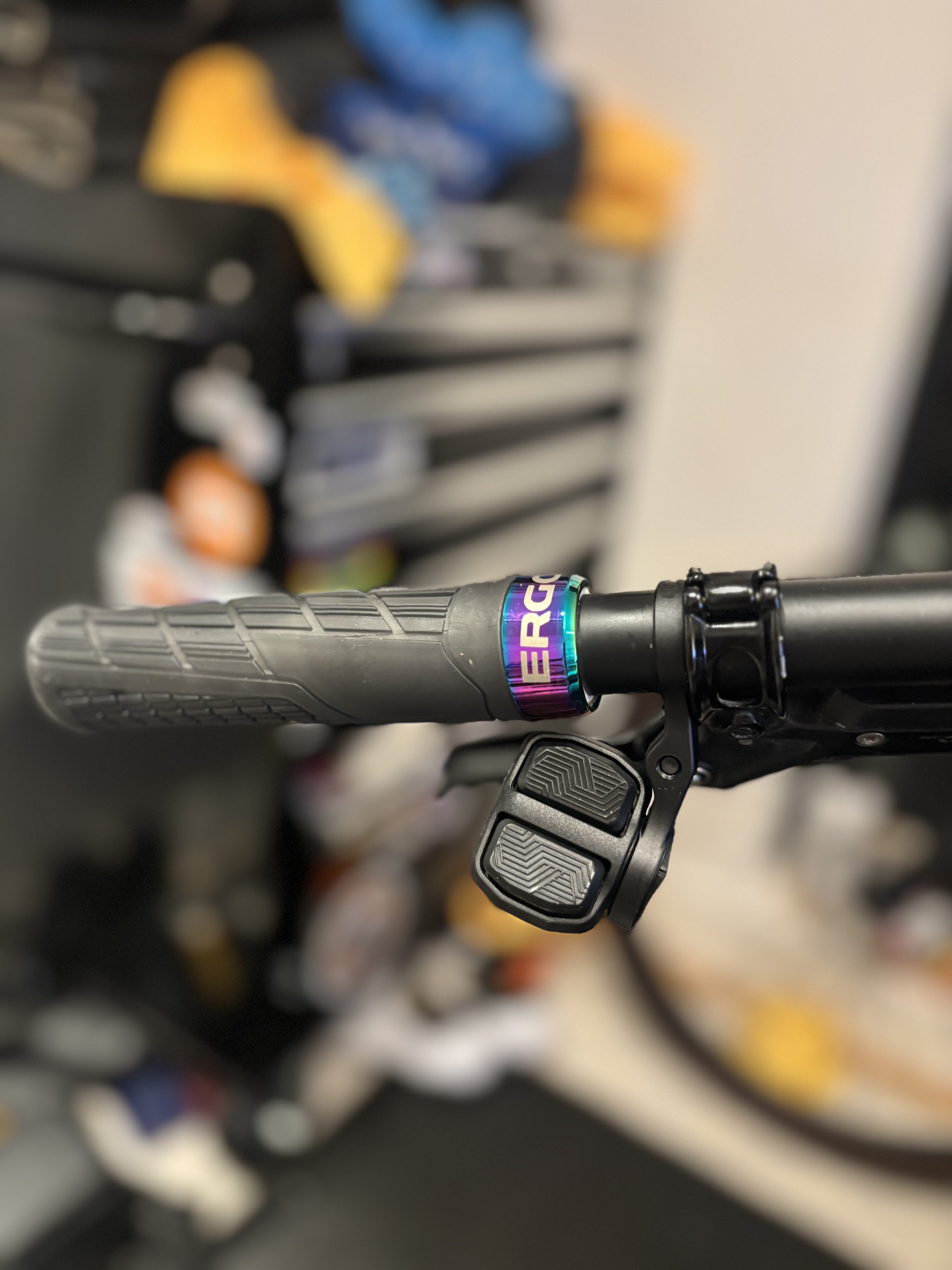
Left-side pod setup for the dropper, with a spare button for manual Flight Attendant control.
My size large Epic 8 EVO Pro came with a 175mm dropper. I went with the 150mm Reverb since that’s what Specialized specs on the large S-Works model and I’ve slowly been converting my EVO to something that more closely resembles an S-Works Epic 8. It’s possibly a little lighter than the 175 and I haven’t been missing the extra 25mm.
I paired it with a left-side
Why I Switched
Before this I was running a Fox Transfer. I went through two of them, and my issue with both was the same: they got less consistent about topping out and slower to rise. You can clean them up and re-grease the collar area, but in my experience that only buys a little time. These droppers require you to ship them off to Fox for service, which takes special tools and a fresh hit of nitrogen gas. I found my second one on sale for $150, which I think is roughly the same cost as the service.
The other tipping point was internal routing. I replaced the housing once and ended up having to pull the bottom bracket just to get the housing to turn from the seat tube into the downtube.
The second Transfer started doing the same thing during warm-ups at the El Paso Puzzler. No top-out. At that point I was looking for a change.
What pushed me to get a Reverb AXS was:
- no dropper cable
- home mechanic-friendly service path
- a cleaner cockpit on a bike and rounding out my AXS / Flight Attendant ecosystem
Pulling the dropper cable out and plugging the routing hole for good was very satisfying.
What I Like
The first thing that stood out was actuation. It moves quickly, gets out of the way fast, and shoots back into its fully extended position. More importantly, it tops out the way I want a dropper to top out.
One of the things that bothers me most with droppers is not being sure they are fully extended. With this one I don’t ever find myself second guessing it. The top-out thunk is clear. It’s not quite as forceful as the Bike Yoke on my Stumpjumper, but it’s strong enough that I always know when the saddle is fully extended.
Quick clip showing the post actuating and the top-out sound.
Pod feel: I was worried this would feel strange but actuating the dropper with pod buttons felt normal on the first ride.
Button mapping: The defaults are solid for me. I tried swapping things so the top button controlled the dropper and the bottom button handled Flight Attendant, but about five minutes from the driveway I changed it right back.
Compared to a lever: I also like not having to throw a lever over and over on long rides. Sounds ridiculous, but I swear my thumb joint would get tired sometimes from throwing that lever. One thing I’m still a little concerned about is the cold. I’m guessing my cold hands are going to have a much harder time knowing if the button is pressed vs a thrown lever.
Flight Attendant bonus: Before this, manual FA meant using the buttons on the fork, which I almost never did. Now I have a spare button at my fingertips. I have mine set to toggle lock, and while I don’t use it often, it’s nice on smooth gravel or road when I want FA to stay locked. It didn’t make Flight Attendant more useful on its own, but it made the whole setup feel more complete.
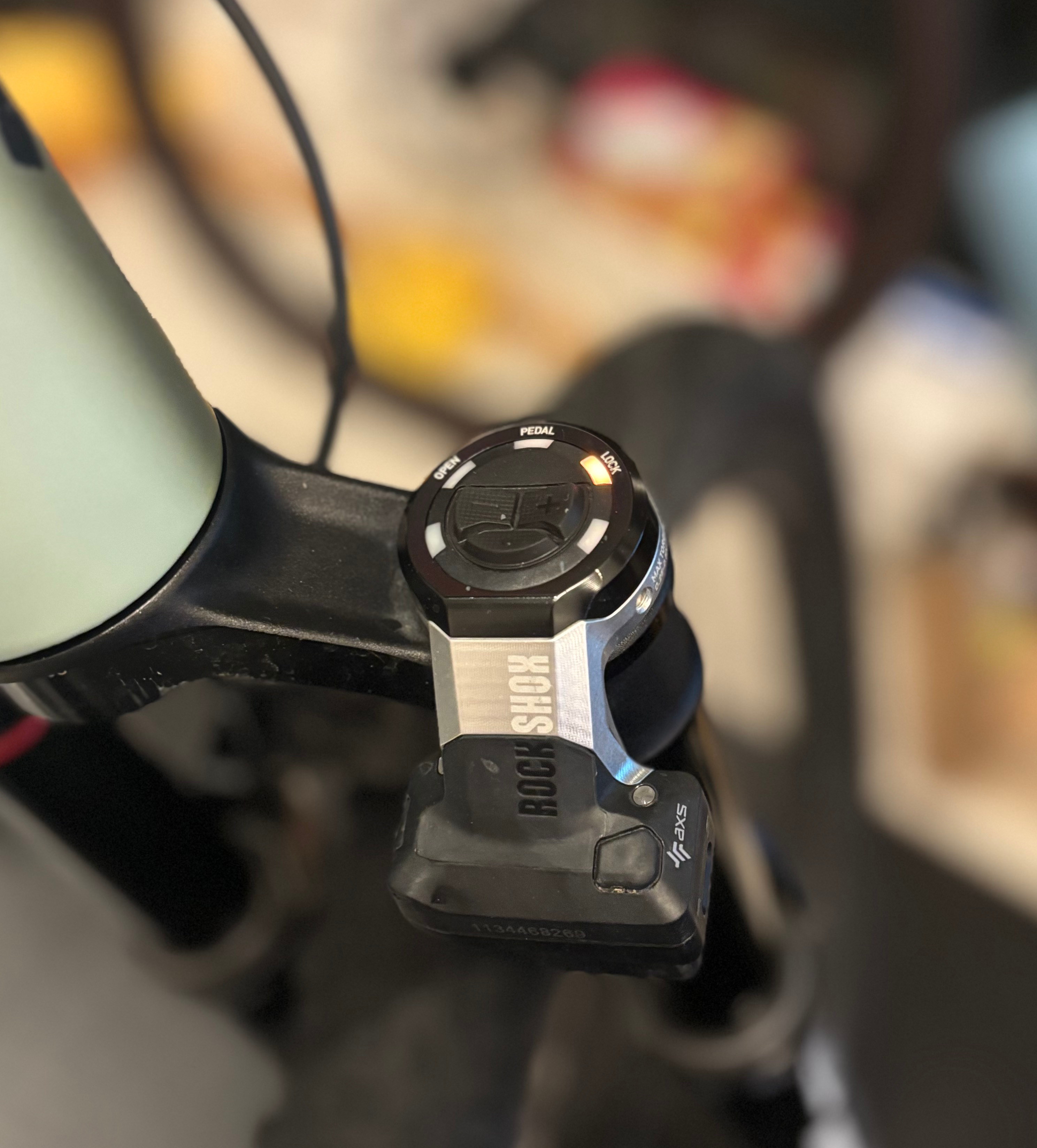
FA in lock mode triggered with the pod button.
What I Haven’t Liked
- Actuation count: the SRAM AXS app seems wrong. Right now it says 17 actuations, which is clearly wrong. On the kind of punchy terrain I ride most often, that would be a pretty useful maintenance metric if it worked. For now, I’ll probably just go by ride hours unless it sorts itself out.
- Pod naming: the app names both pods just “Pod”, which is annoying when you are trying to tell left from right. There doesn’t seem to be a way to rename things either.
- FA button behavior: More of an “it would be cool if…” I wish there were more customization options for the spare Flight Attendant button. Right now I have it set to toggle between lock and auto, which is useful, but it would be cool if SRAM added more options like a long press to begin cycling through modes or the ability to toggle a split-state mode (i.e. rear locked and front open).
Serviceability
One of the reasons I bought this version is that RockShox seems to have put a lot more thought into home mechanic serviceability. That mattered coming from a post that felt more like a replace-or-send-it-out item once it started going south.
According to the SRAM Reverb AXS B1 service manual, the key service intervals are:
- Every ride: clean dirt and debris from the seatpost
- Every ride: inspect the upper post for scratches or damage
- Every ride: check AXS controller and seatpost battery levels
- 1 year / 300 hours / 10,000 actuations: basic service
- 2 years / 600 hours / 20,000 actuations: complete service
When I hit the 300-hour and 600-hour marks, I plan to publish service guides and notes based on how the post has held up. It seems that the only thing out of the ordinary needed is a 600 PSI shock pump since most pumps go up to about 350 PSI.
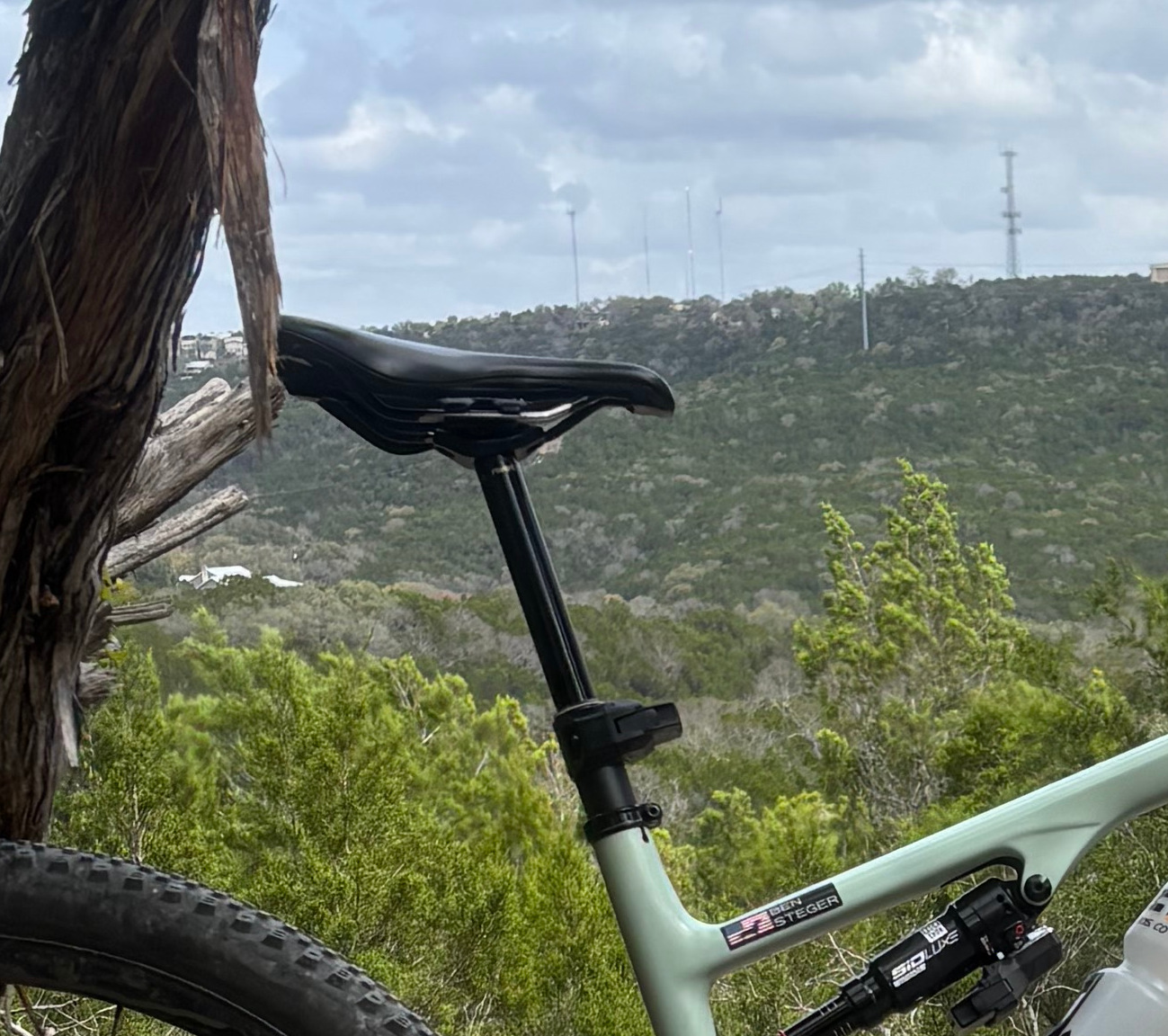
Out on tight, punchy Texas trails where this post gets actuated constantly.
Reverb AXS vs. Cable Dropper
If you already have a reliable cable dropper and never think about it, a wireless dropper is probably not the right upgrade. But if:
- your current post is getting inconsistent
- you hate internal routing work
- you’re already running AXS and Flight Attendant
- you put a ton of hours on it and servicing is a pain or impossible
then this makes a lot more sense.
Final Thoughts
For me, this was not just about “wireless is cool.” It solved a real annoyance on my race bike, cleaned up the setup, and gave me a dropper that doesn’t have me wondering whether it’s going to misbehave while I’m sitting at the start line.
Deal Finder
Where to buy
Related Gear
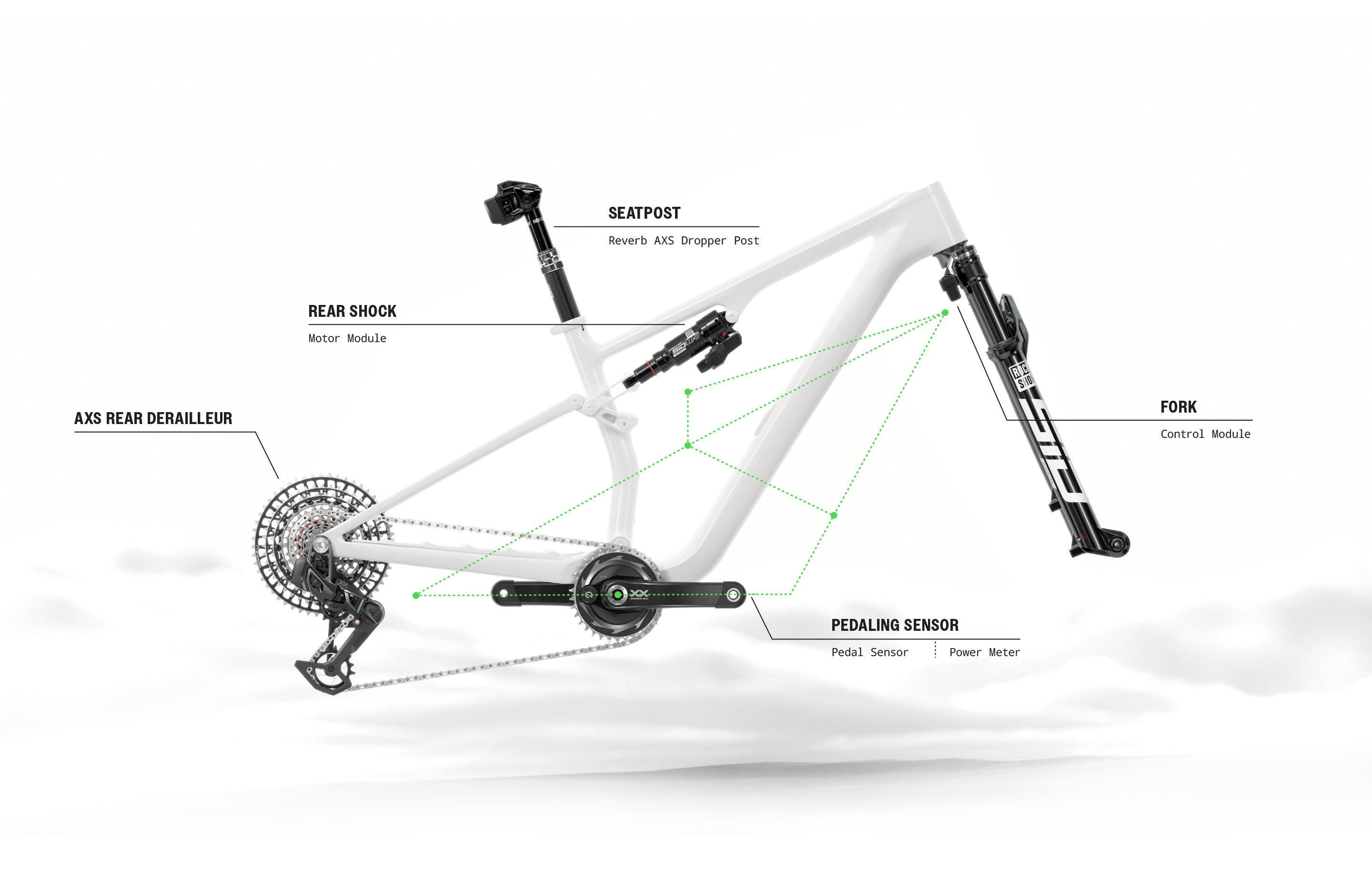
RockShox Flight Attendant
Electronically adaptive suspension SID ULTIMATE - fork / SIDLuxe ULTIMATE shock.
Read the review → Buy Now
Chamois Butt’r Original
Reliable anti-chafing cream trusted by cyclists for comfort on long rides.
Read the review →