Maxxis Aspen AT 2.4 MaxxSpeed
Aggressive XC race tire with exceptional loose-terrain grip, a true 2.4-inch casing, and the confidence to stay on the gas through rough terrain.
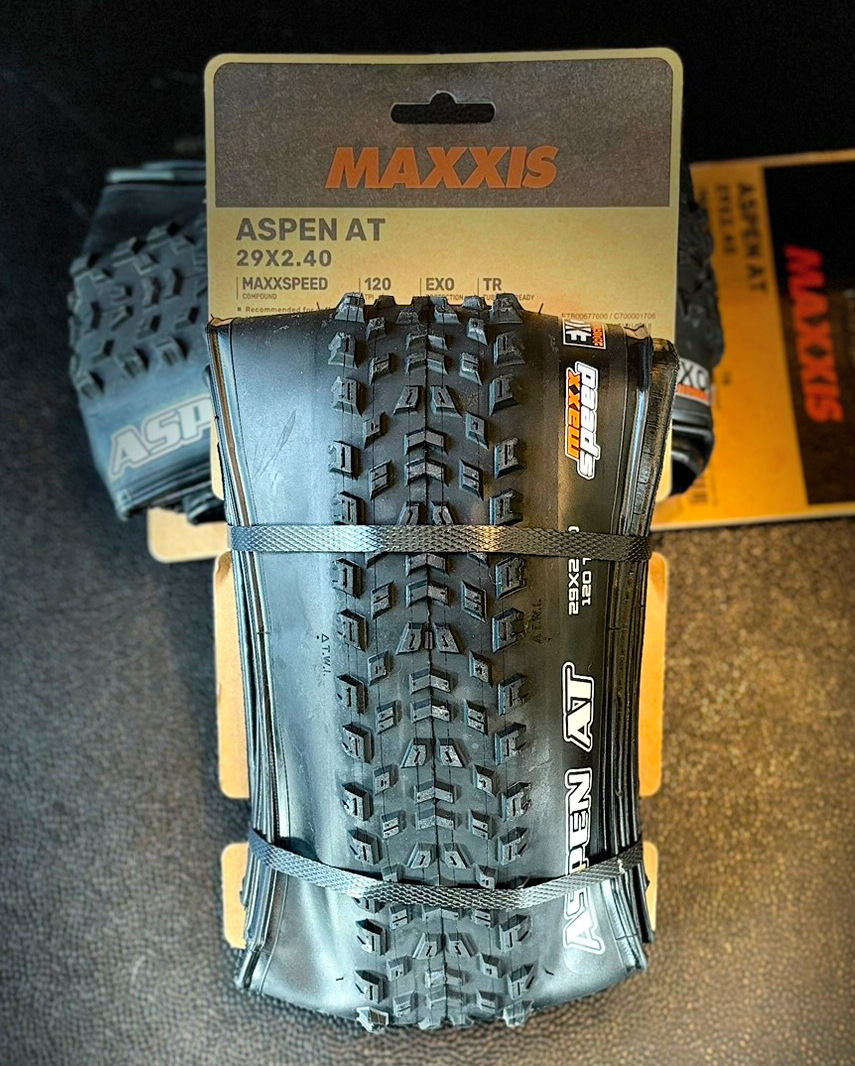
After spending plenty of time on the relatively skinny Schwalbe Rick XCs, getting back onto a true-volume 2.4 with an aggressive tread felt like switching from a butter knife to a chainsaw. I’ve always loved the feel of the 120 TPI Maxxis casing and MaxxSpeed compound, and the AT puts that familiar, grippy, forgiving ride into a package with some serious bite.
The knobs aren’t outrageously big, but they’re large for an XC race tire. On loose terrain, that materially changes what you can get away with. I wasn’t just holding a cautious line through corners; I could brake hard, lean the bike, change direction, and get back on the gas without second-guessing the front end.
There’s a weight and rolling-speed penalty to the control. But if you carry more speed through loose corners, rough terrain, and spare your legs hundreds of little accelerations, you can overcome that penalty in the right conditions.
Quick Specs
- Size: 29 × 2.4”
- Measured weights: 843g / 830g
- Casing / compound: 120 TPI / MaxxSpeed
- Measured width (18 PSI on 29mm internal rims):
- Front: 2.44”
- Rear: 2.43”
- Best terrain: fast loose-over-hard, chunky loose climbing, rough pedally sections, roots
- Best use: aggressive XC and marathon racing, especially where grip and comfort can offset weight and rolling resistance
Availability note (October 2026): The 29” Aspen AT has been a little hard to find from US retailers. If you’re having trouble tracking one down, check directly with Maxxis. Just make sure you’re looking at the 29” version—many listings are for the 32” tire.
In My Setup
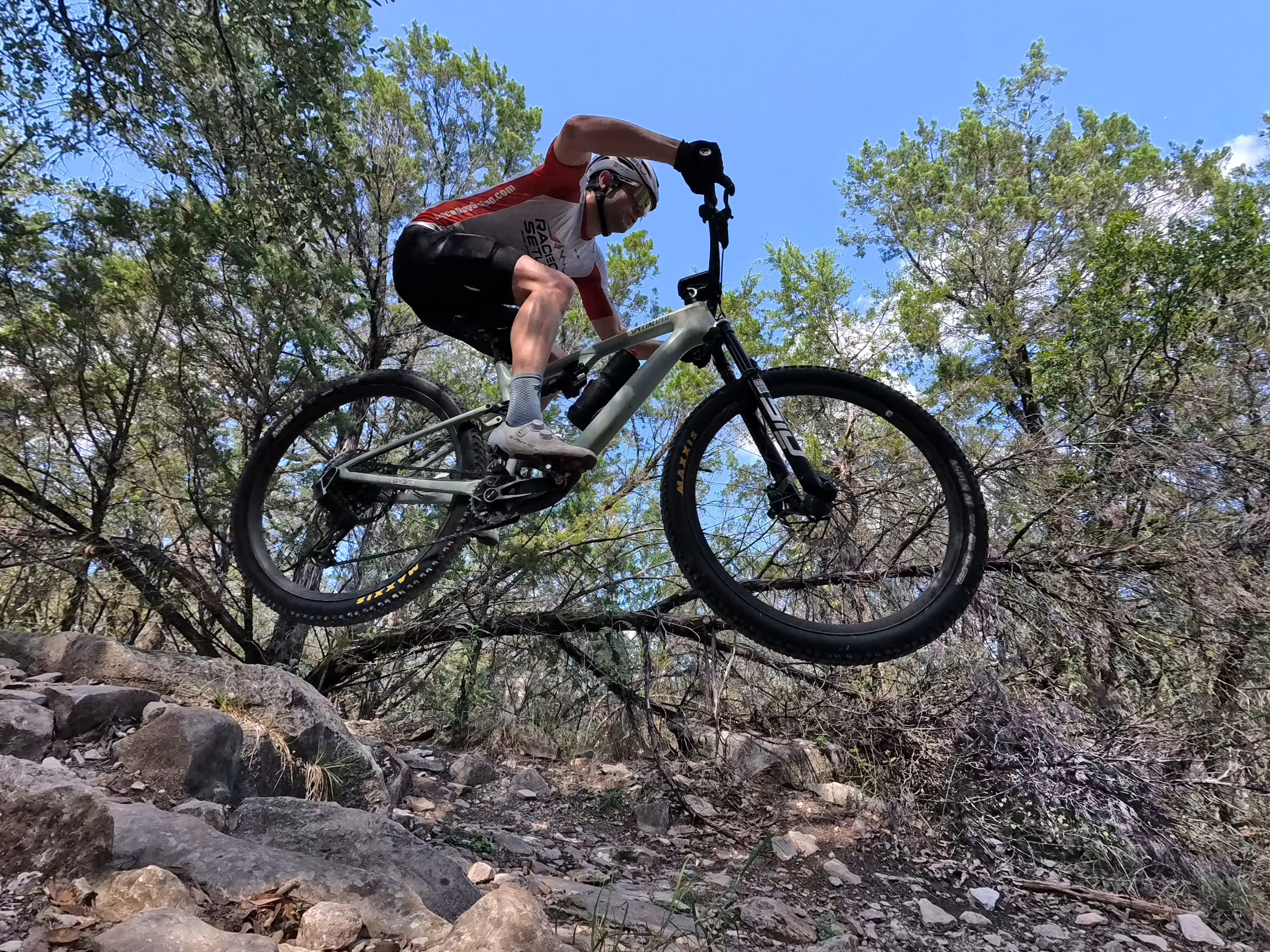
- Bike: Specialized Epic 8
- Wheels: Roval Control, 29mm internal
- Inserts:
 Vittoria Air-liner Lights ↗️
- Tires: dual Aspen ATs, approximately 15 hours, at 14 PSI front / 15 PSI rear
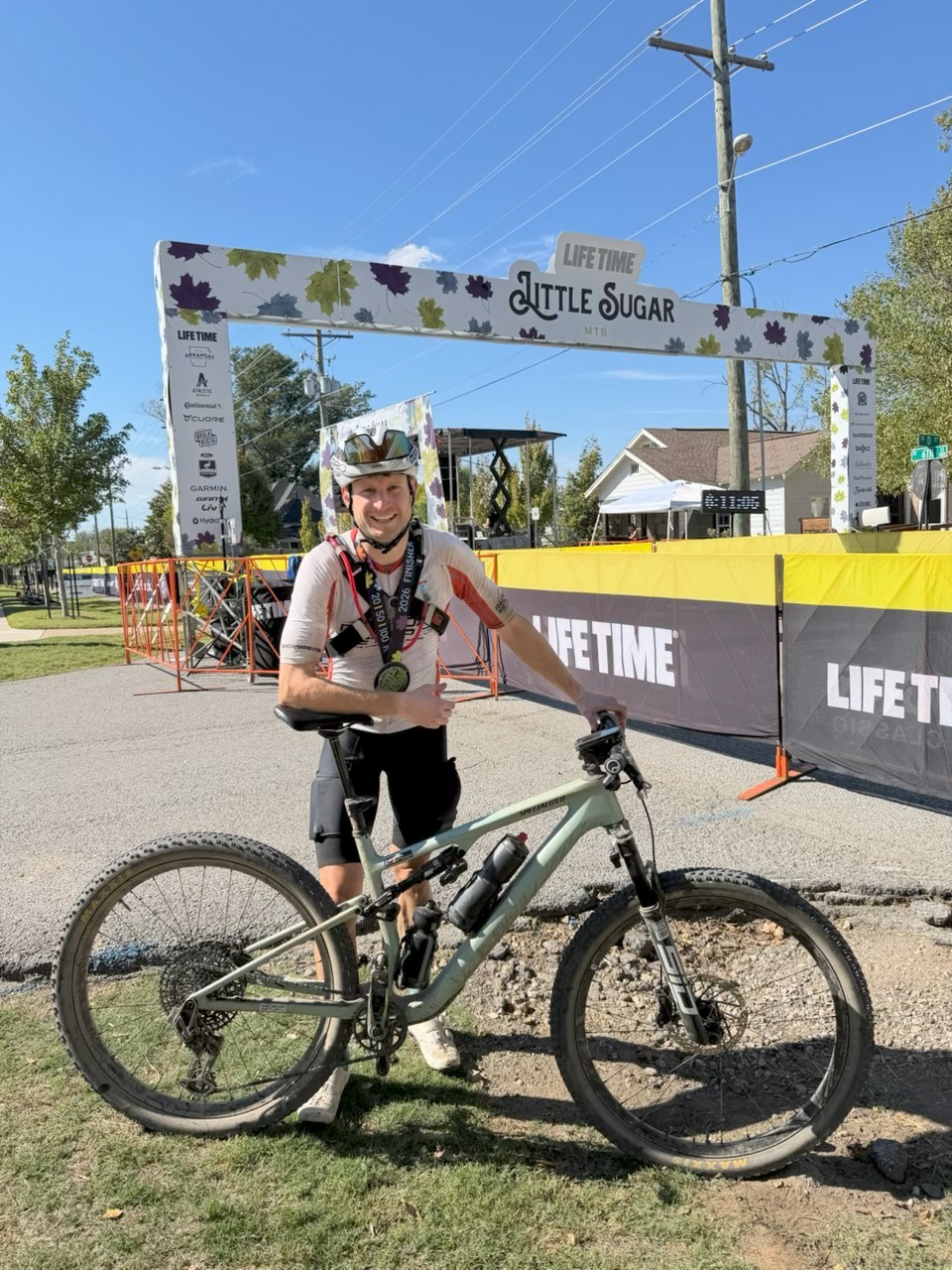
- Race: Little Sugar,
Aspen AT front ↗️ /
regular Aspen rear , at 14 / 15 PSI - Trails: Barton Creek Greenbelt and Walnut Creek in Austin, Bentonville/Bella Vista’s loose-over-hard singletrack
Disclosure: Maxxis provided the tires for testing. These are my own riding impressions.
Loose Corners: The AT’s Party Trick
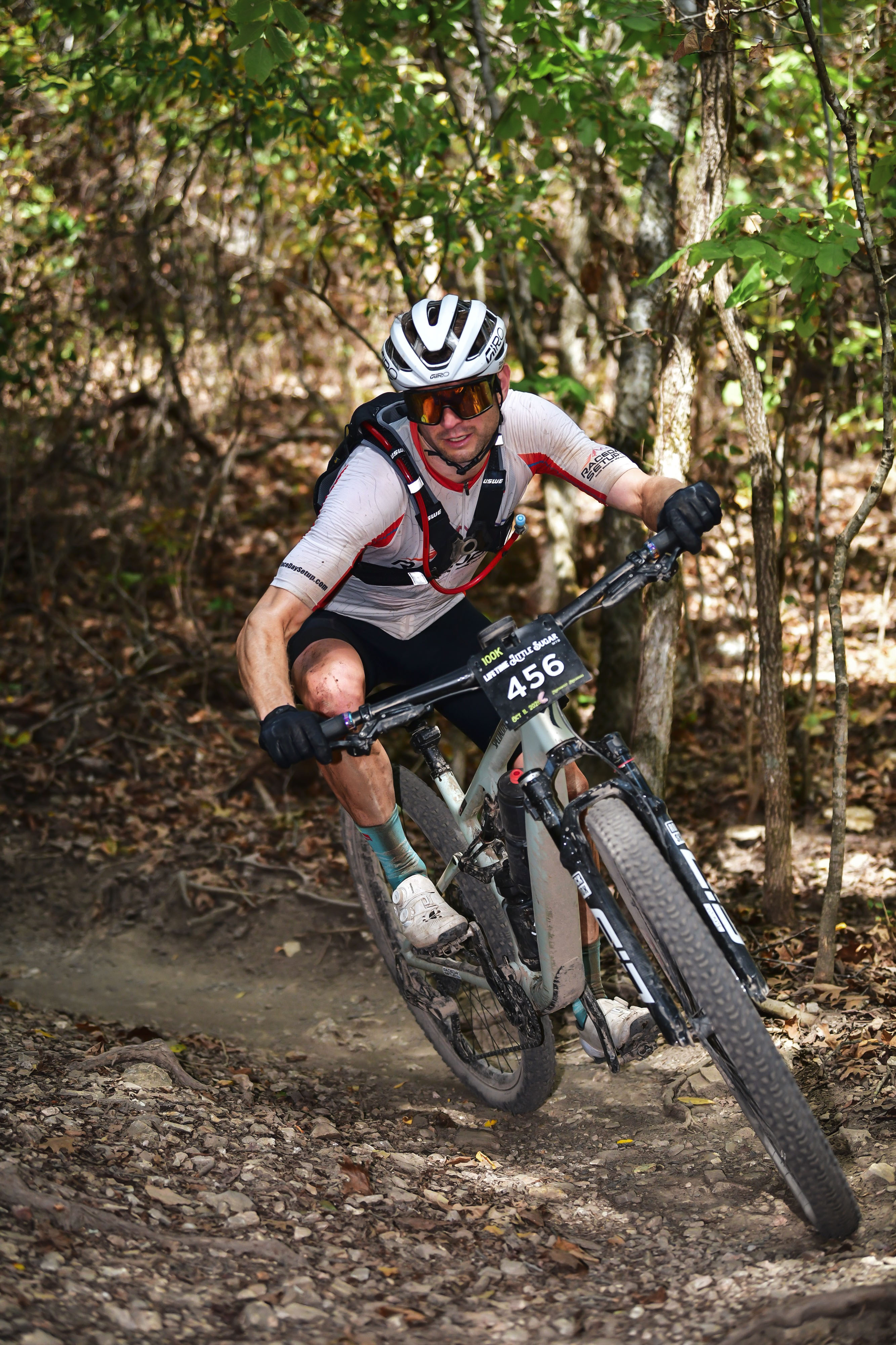
Loose-over-hard is where the AT really won me over. Little Sugar was a perfect test candidate at race pace: corner after corner of marbly, loose material sitting on hard dirt.
With the AT, I could maneuver aggressively and get away with little mistakes which just spurred me to ride faster and push this tire harder. The transition onto the shoulder knobs felt great, and the tire just kept finding something to bite into. That meant less braking on the way into corners, more speed through the exits, less work accelerating out. The AT kept me loose and confident on the bike, leaving my hands and back feeling fresh after hours of riding.
Staying on the Gas Through the Rough Stuff
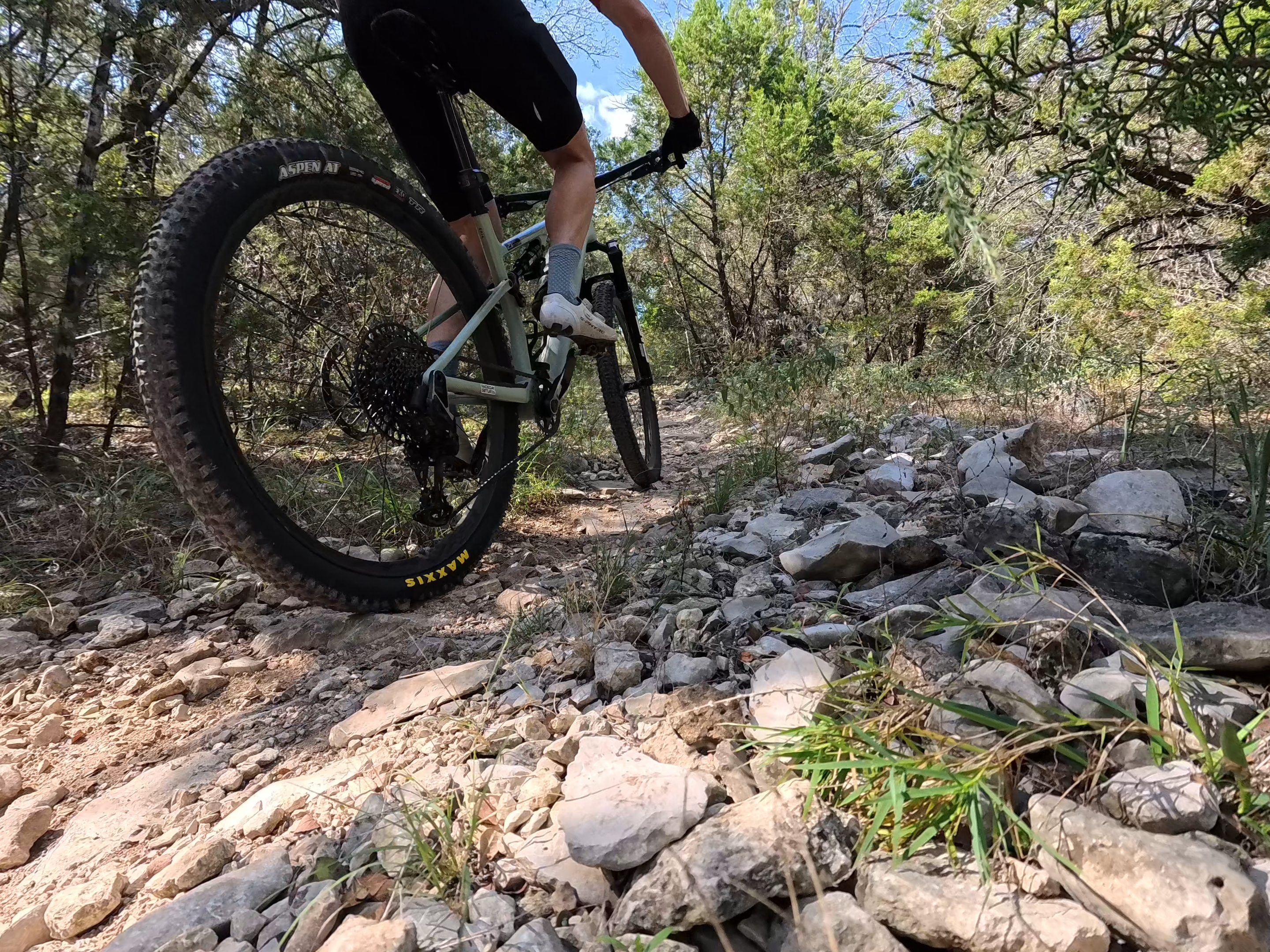
Flat, rough sections where you’re pedaling hard? The ATs are absolute champs.
There are stretches of the Barton Creek Greenbelt I’ve ridden hundreds of times where I’d normally ease off through the worst chunk, lose speed, and then accelerate again when things settle down. On dual ATs, I found myself just staying on the gas. The casing soaked up the repeated hits while the tread kept the bike driving forward. Familiar trails were suddenly fun in a new way.
The same goes for short, steep, technical climbs. At low pressures, these true 2.4s conform to the ground instead of skating and skittering around looking for traction. It feels like every pedal stroke is going towards moving you forward.
Little Sugar: AT Front, Regular Aspen Rear
I raced Little Sugar with an AT up front and a regular Aspen in the rear. I’d been unusually nervous heading into the race (something I’m working on). I was stressing about the start, nutrition, hydration, and simulating different scenarios. One thing I didn’t ever question was front-end grip.
Bentonville throws an enormous number of loose corners at you. The AT let me carry speed through them and smoothly get back on the gas without making my efforts too spiky. That was especially valuable late in the race, when fatigue can cause me to over-brake, scrub speed, and then hammer at an uncomfortably low cadence. Even when I was torched, the front was just dependable.
Switching to a regular Aspen rear was noticeable in terms of rear traction. On short/steep/loose climbs, I had a handful of cases of rear-wheel slip where I think the AT would’ve just pressed forward. Rear braking grip was noticeably lower and the back end moved around more in corners. None of it was a big deal - just an expected difference between the regular Aspen and its muscle-bound cousin. With as much confidence as I had up front, I really didn’t give the rear any thought during the race.
I’d make the same tire choice for Little Sugar again. Little Sugar rewards smooth, repeated accelerations. The AT front / regular Aspen rear was a great balance.
The Speed Penalty—and Where It Pays Back
The AT has a good old mountain bike tire hum on pavement. My measured tires came in at 843g and 830g, roughly 70g heavier than a regular Aspen. If you’re considering the AT, you’re probably not looking for a weight weenie slick for the type of riding you have in mind anyway.
Given the beefed up tread pattern and the added weight, I didn’t feel slow on this tire, either (despite it being brutally hot in Austin at the time making everything feel slow and miserable). I spent plenty of time on pavement and mixed-surface connectors getting to the Greenbelt and Walnut Creek, and dual ATs looked like they should be rolling pretty slow - but they weren’t. On the pavement-heavy final miles of Little Sugar, I remember thinking a faster tire would be nice—and then realizing I was actually rolling really well.
There are places where the AT lets me carry speed I’d otherwise throw away: through loose corners, over rough pedally sections, and short, technical climbs. That’s speed you don’t see by looking at a tire’s weight or a rolling-resistance chart.
Low Pressures, Big Volume, One Clearance Caveat
I ran 14 PSI front and 15 PSI rear in training, and kept those pressures for Little Sugar with the regular Aspen in the rear. I know plenty of riders would balk at that, but it works for me with my setup and inserts.
The tires were pretty forgiving of pressure changes, and the generous volume of the AT makes low pressures really nice with all the conforming and biting they do. The tradeoff is a greater risk of bottoming out on a big square edge. I had one memorable rear-tire bottom-out at Little Sugar when I failed to unweight over a concrete bridge footing sticking up a few inches. I got away with that one but it was a reminder that I needed to stay vigilant and not let the wheels smash into hard edges.
The AT measures 2.4+, and rear clearance on my Epic 8 (max tire width is 2.4”) was tight. I saw a small contact mark from the side knobs on my frame tape on the rear triangle after a long training ride. No harm done - this led me to discover that one of my rear wheels is dished ever so slightly off-center. Switching to my other rear wheel helped the issue but I still found smaller contact marks after a few long rides so it’s worth checking clearance in the rear before riding.
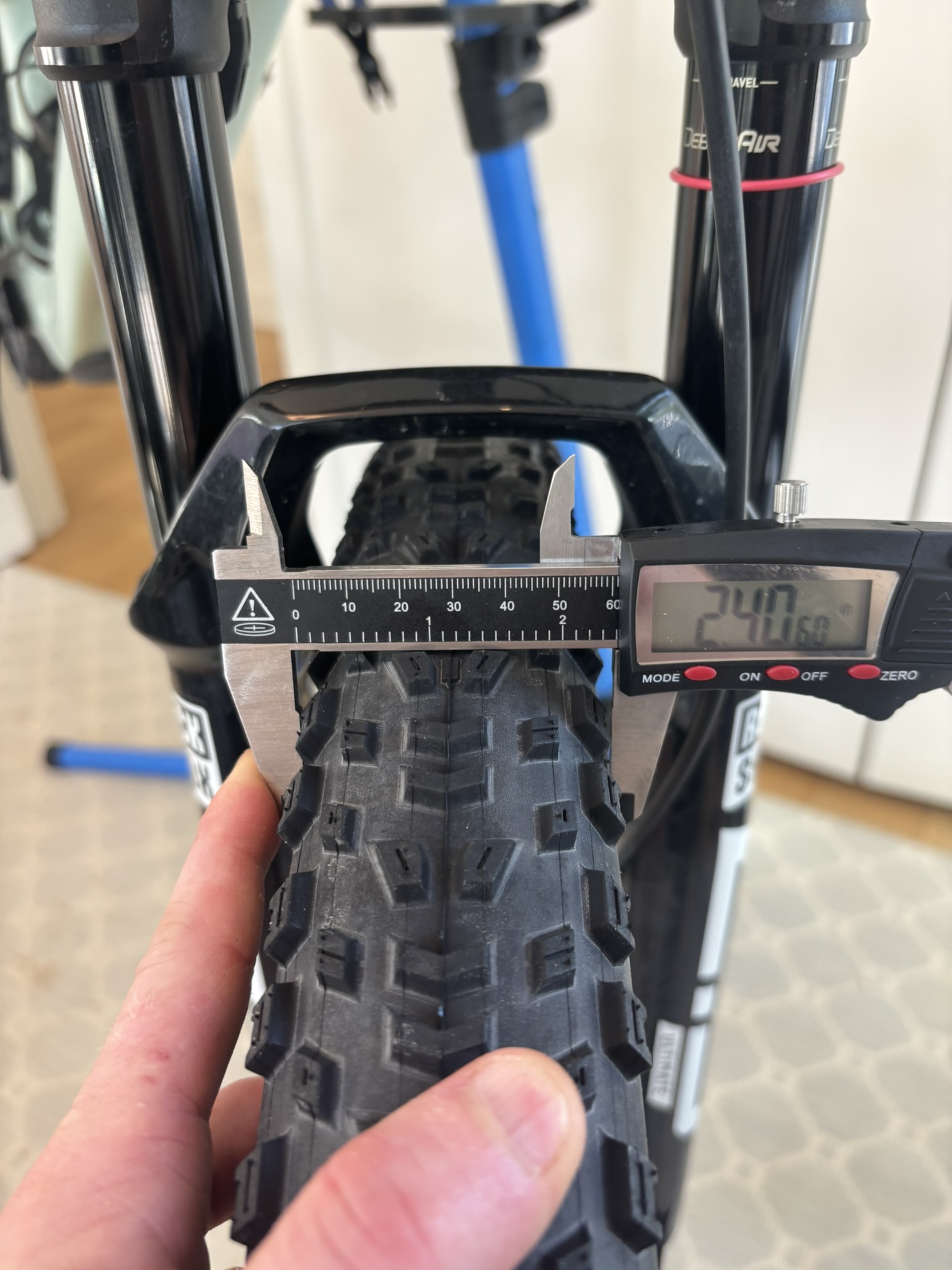
This tire measured 2.40” at 14 PSI when photographed new. After additional training and racing, it measured 2.43” at the same pressure.
Durability
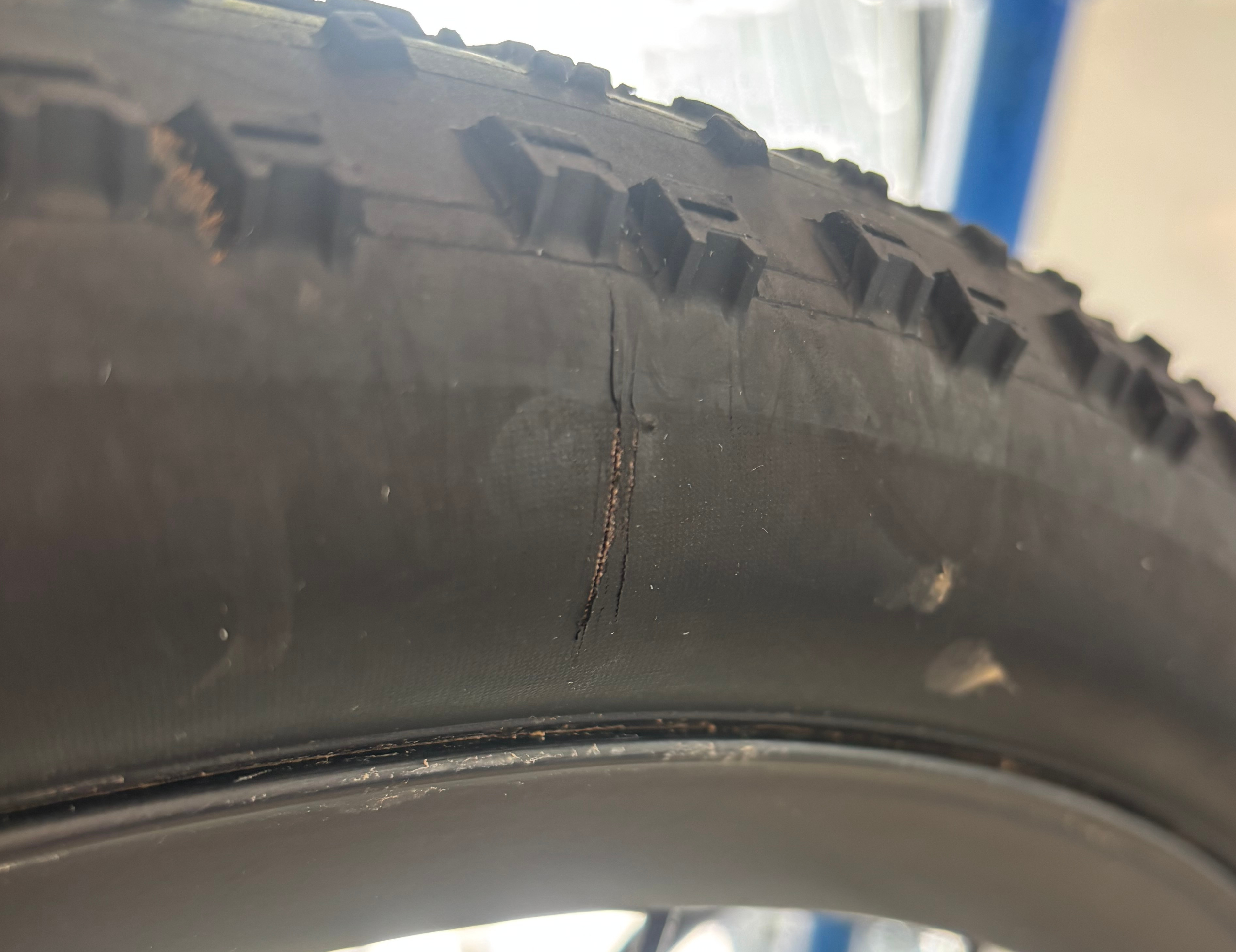
After roughly 15 hours on dual ATs, plus Little Sugar on the front, the knobs still look great, and I haven’t seen any discernible tread wear. The 120 TPI casing held up great on the notorious Bella Vista trail systems. I had one slice down the sidewall of the regular Aspen in the rear (same casing and sidewall protection) that cut through the EXO protection layer but didn’t make it all the way through the casing.
The fact that it didn’t puncture only added to my confidence in Maxxis’s EXO protection and 120 TPI casing.
Final take
If you’re an XC racer facing some seriously loose and/or gnarly terrain, the AT is not going to let you down. It pairs excellently with a regular Aspen in the rear to strike a balance between control and speed. If you want a fast do-it-all daily driver, especially for high-country riding, the AT is a great choice.
I reach for lighter, faster-rolling tires than the AT for plenty of races. I can’t help it - the racer in me is willing to sacrifice some grip in the name of speed. And I’m certainly not alone, which is exactly why the AT can offer an advantage when other riders find themselves a little undergunned.
I can see ATs being a no-brainer at races like Downieville (the 2026 winner on XC day ran dual ATs!) or on Wheeler day at Breck Epic, where rough, loose terrain rewards a more capable tire.
The Aspen AT lets you dive into corners, power through chunk, and attack descents with the kind of confidence that can make you genuinely faster.
Deal Finder
Where to buy
Related Gear
Pirelli Scorpion XC RH 2.4
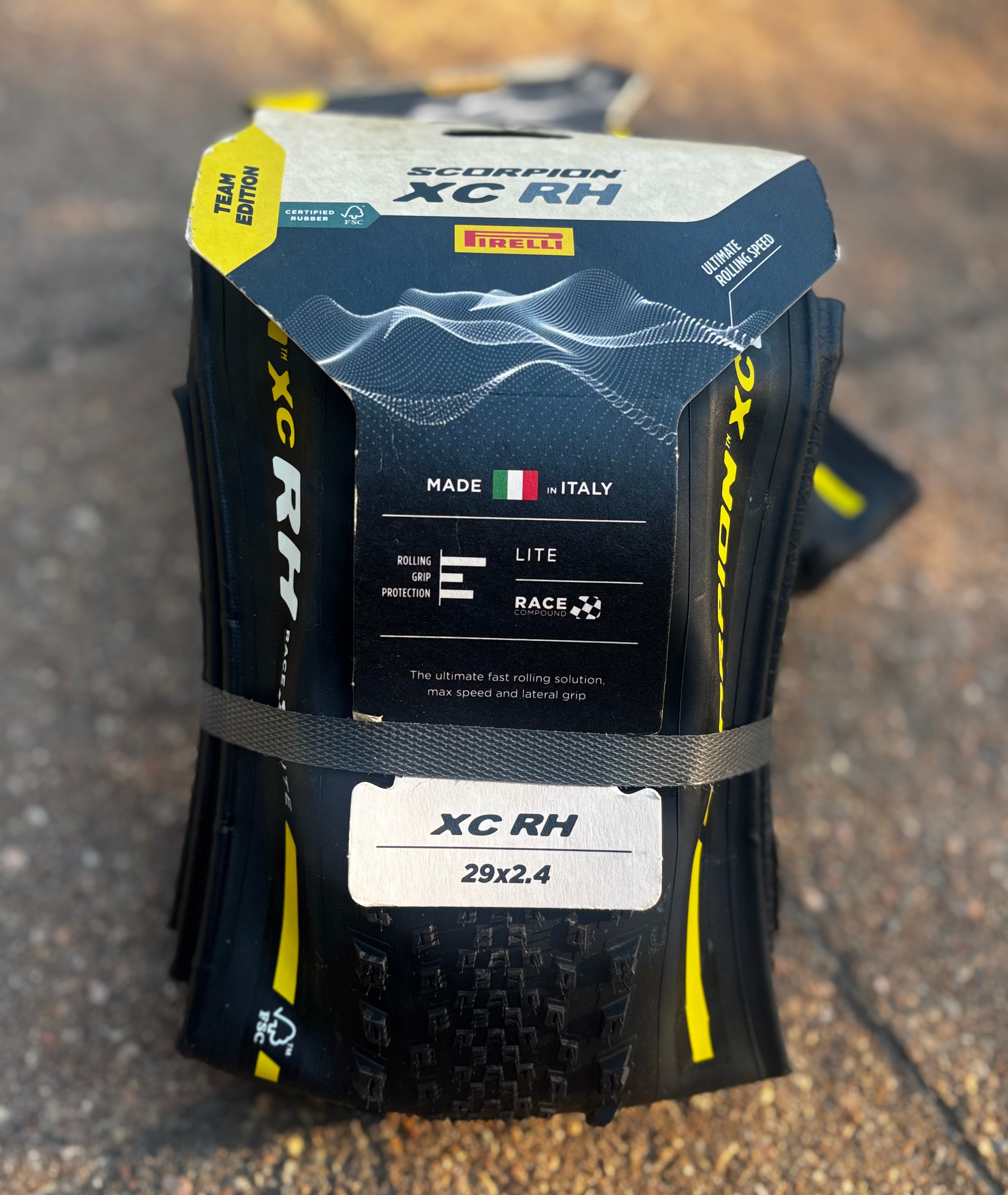
The fastest true 2.4-inch MTB tire I've ridden (as of 8.1.26), built for dry, less-technical courses where outright efficiency matters more than braking and cornering.
Read the review →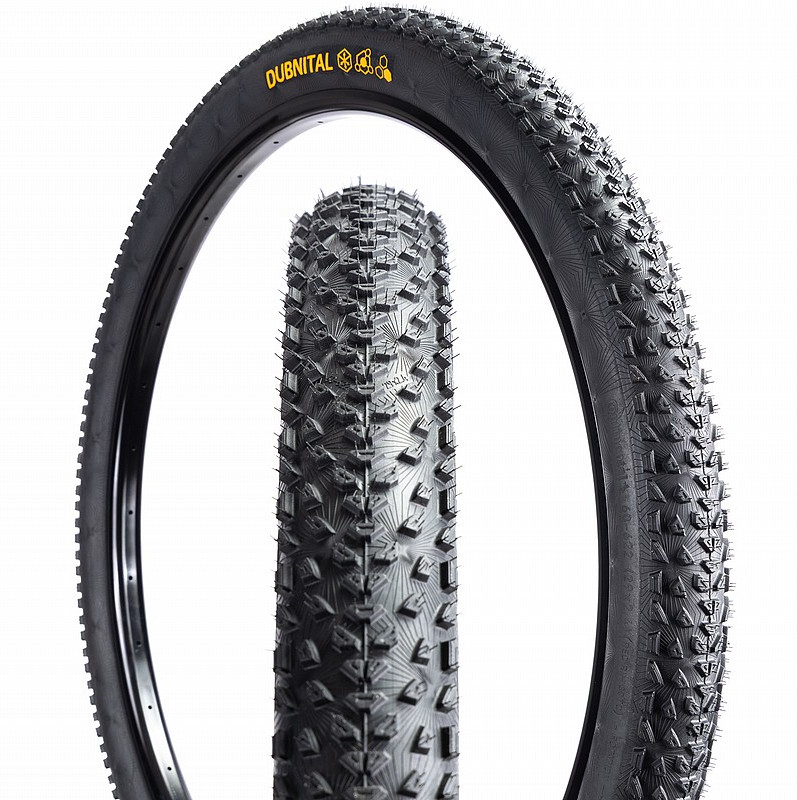
Continental Dubnital 2.4 Race Rapid
An extremely light and fast-rolling XC tire with outstanding grip for its category, but a very narrow use case in the ultra-light Race Rapid casing.
Read the review →
Specialized Purgatory 2.4
Trail tire with aggressive knobs and solid volume for traction.
Read the review →