Garmin Rally XC100 - Long-Term Review
Garmin Rally XC100 long-term review after heavy XC MTB use, including where pedal-based power still makes sense and where it falls short.
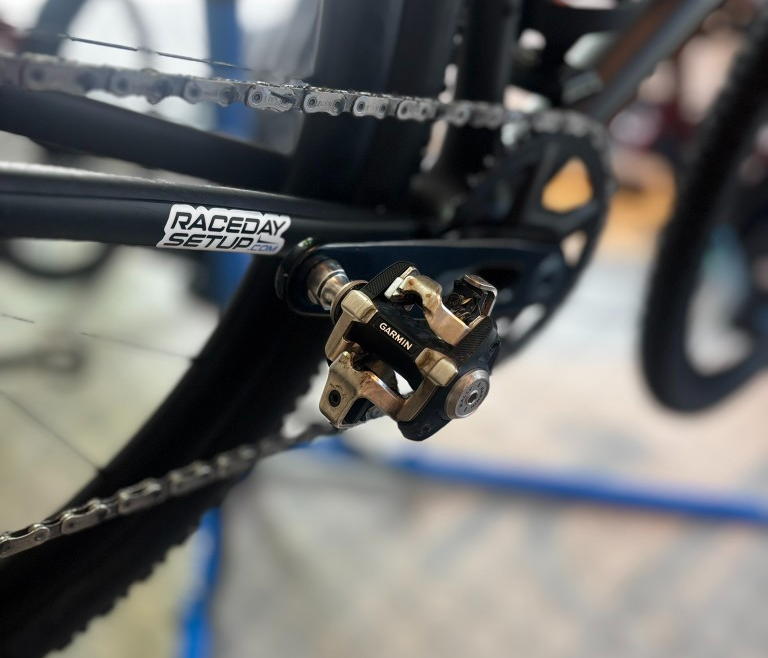
Garmin Rally XC100
Garmin has since released a newer generation of these pedals (XC210/110s), so this isn’t a “consider buying this exact pedal right now” kind of review. It’s a long-term look at the older Rally XC100 and what I think it teaches about pedal-based power meters in general.
I bought the Garmin Rally XC100 back in late 2023 when I was starting to get more serious about structured training. At the time, pedal-based power made a lot of sense to me. I was riding a Shimano XT drivetrain, I was still relatively new to wrenching, and swapping pedals was way more straightforward than finding a compatible power meter crank arm or sending mine off to get fitted with one. I also only had one mountain bike at the time, so having it down for a couple of weeks with a crank arm in the mail wasn’t very appealing.
While they’ve served their purpose well, after nearly two years of hard XC mountain bike use - including training and racing some major events like Breck Epic - I have mixed feelings about them.
The good news is that the actual power meter side of these pedals has been excellent. The bad news is that the pedal body and bearing side hasn’t held up nearly as well as I’d want from something this expensive, and the cost to rebuild these pedals when the bearings go is very steep because of the need to replace the entire pedal body. Even after replacing the pedal bodies, I’m still having issues with the seals and it’s looking like these are on their last legs.
Quick Specs
| Power meter | Garmin Rally XC100 |
| Type | Single-sided pedal-based power meter |
| Cleat standard | SPD |
| Use | XC MTB, gravel, and indoor workouts on a Peloton in a pinch |
| Time on pedals | Roughly 2 years |
| Estimated use | ~400 miles/month for almost 2 years |
| Current bike | Specialized Crux |
| Previous bikes | Epic 8, Stumpjumper |
| Current MTB setup | Shimano XTR pedals + SRAM spindle-based power meter |
Note: Garmin has since updated this pedal line. This review is based on my long-term experience with the older-generation Rally XC100.
Why I Bought Them
Back when I bought these, I was riding my Stumpjumper and just starting to pay attention to power data.
Pedal-based power was appealing for a few reasons:
- it was the easiest style of power meter for me to install
- I could move it between bikes
- it didn’t lock me into one crank or drivetrain setup
- there wasn’t a clear exact replacement available for my XT crank arm
- getting a Shimano MTB crank arm fitted with a power meter wasn’t especially straightforward
That last point mattered more than I realized at the time. Everyone understands how to swap pedals. Not everyone’s comfortable replacing crank-based components. That ease of installation is a big part of what you’re paying a premium for. In hindsight, the most reasonable move for me at the time probably would’ve been to visit the LBS and have them help me pick out and install a crank-based power meter.
The Real Benefit of Pedal-Based Power
The biggest strength of these pedals has been portability.
When my Epic 8 was down with a broken wheel and I was waiting on a rebuild, I moved the pedals onto my Stumpjumper and kept knocking out MTB endurance rides without any lapse in power data. That was genuinely useful. They were also handy when I got my Crux. Instead of immediately swapping out a crank arm and picking up a new set of pedals, I already had a solution ready to go.
I even brought them to my in-laws’ house for Christmas along with shoes and a bike computer and used them on their Peloton for workouts. It was a weird setup, but it worked.
If you have three or more bikes that you’re down to run off-road pedals on, pedal-based power can be a good solution. The best use case I can think of for power meter pedals is for someone like Ben Delaney who tests bikes for a living and needs to be able to collect power data on a variety of bikes without having to swap out major drivetrain components.
What I Like
1. The power data has been excellent
The electronics side of these pedals has been rock solid for me.
I haven’t had any meaningful connection issues, weird dropout problems, or calibration drama. I’ve also run them at the same time as my SRAM spindle-based power meter, and the numbers have lined up very well. Massive pedal strikes don’t seem to affect the accuracy of the power data either.
Even though I have some complaints about the pedal body side of the system, I do trust the power data.
2. Battery life is long and reliable
Battery life has been one of the better surprises with these. The batteries last a very long time, and I rarely find myself needing to swap them. Compared to my SRAM spindle power meter, which seems to chew through AAA batteries pretty quickly, these felt low-maintenance day-to-day.
The downside is that they use a weird battery size that you’re probably not going to find locally, so you need to plan ahead and keep extras on hand.
3. They solve the compatibility problem easily
If you have multiple bikes or a bike that didn’t come with power and you don’t want to start replacing drivetrain parts, this is the simplest (and possibly the most expensive) solution.
What I Haven’t Liked
1. The seals and bearings haven’t held up the way I wanted
In my experience, these pedals do a very poor job keeping dirt and grime out of the pedal internals. Every time I serviced them, they were absolutely filthy (particularly the drive side). I never once opened them up and thought, “eh, these actually look pretty good.”
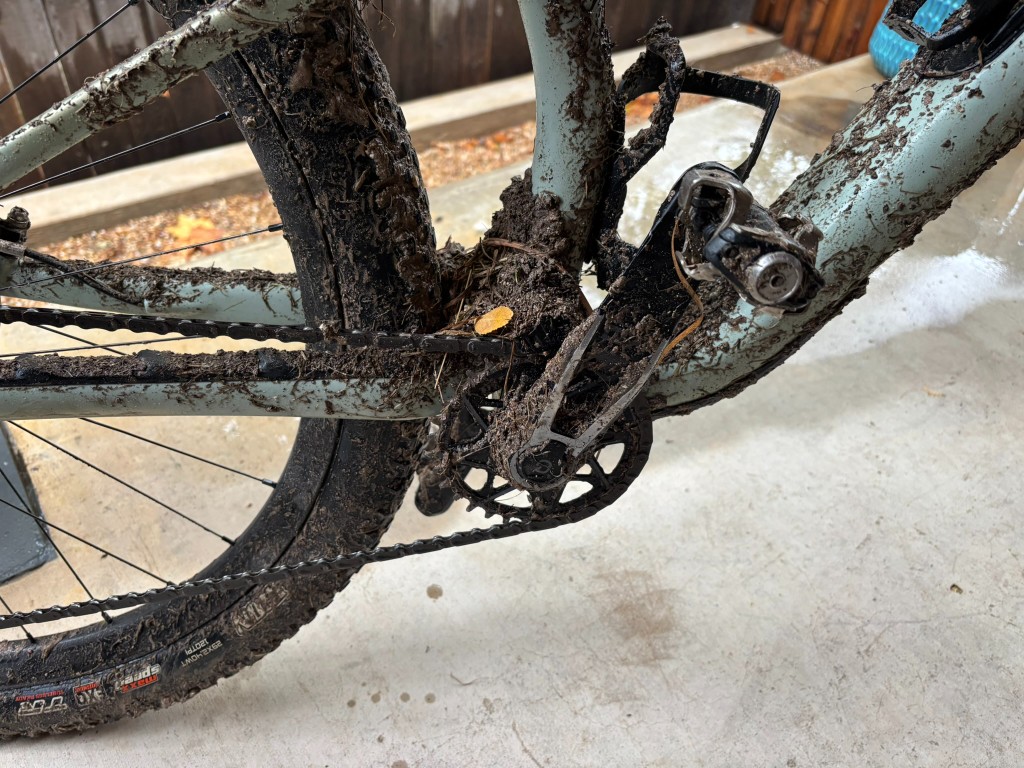
I serviced them roughly every three months and that wasn’t enough. Looking back, monthly or bi-monthly servicing may have been the optimal move, but I have no interest in tending to pedals this needy. There’s not really a way to get the inside of the pedal bodies truly clean so you end up doing your best and working some new grease into the bearings.
Eventually, the roller bearings on the right pedal got so worn that they started falling out of their cages. Both sides had developed play too. At that point, I ended up replacing the pedal bodies for ~$400 to keep running them on my gravel bike.
Unfortunately, even the new pedal body hasn’t completely solved the seal issue for me. About 10 miles into Pikes Peak Apex Queen of the Canyons (135-mile race), the outer seal on the drive-side pedal popped out and was dangling around the spindle - the same kind of issue I’d seen before replacing the bodies. I don’t know whether that’s a tolerance issue with the non-power-meter spindle, wear on my spindle, or something else, but the drive side has consistently been the dirtier, more problematic side for me. This left me feeling like I threw good money after bad by buying new pedal bodies.
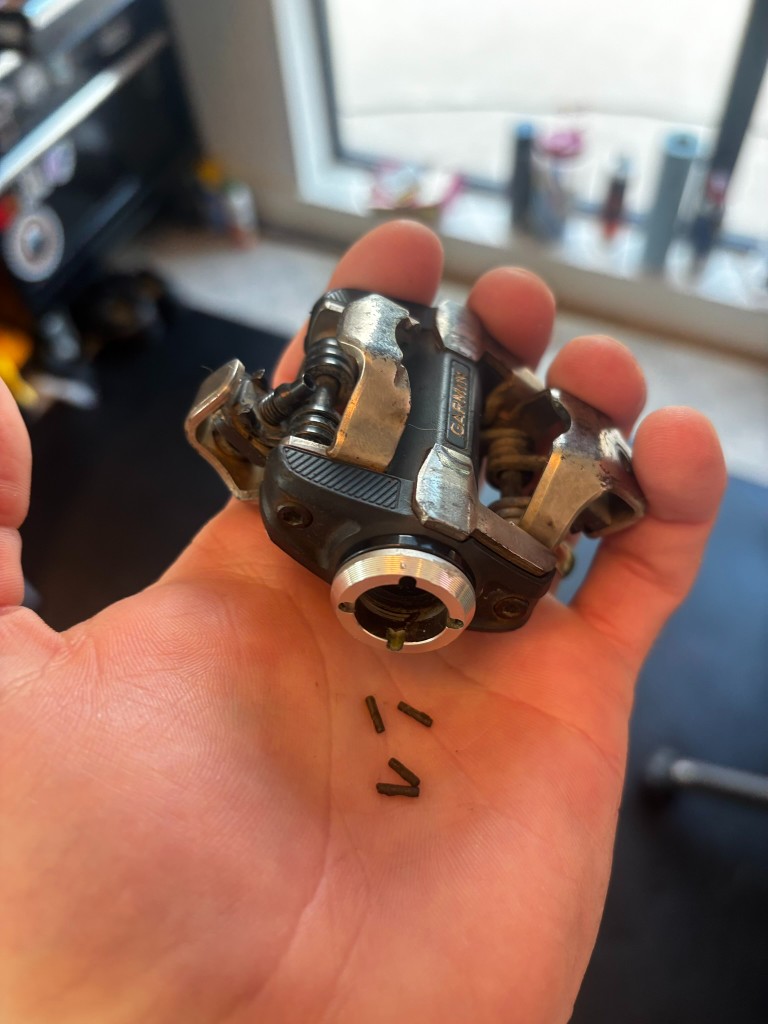
2. The pedal body rebuild path is expensive
This is my biggest long-term complaint with pedal-based power for off-road riding. All of that expensive tech is built into a part that’s inherently exposed, strike-prone, and eventually consumable. Pedals wear out. Bearings wear out. Seals wear out. Once that happens, the ownership cost gets a lot harder to swallow.
What I really wish Garmin had done is make the bearing side more fully rebuildable with standard, replaceable cartridge bearings. If that were the case, these could be a much better long-term ownership proposition.
Instead, once the bearings and internals get worn out, you’re looking at expensive replacement pedal bodies rather than an affordable bearing service.
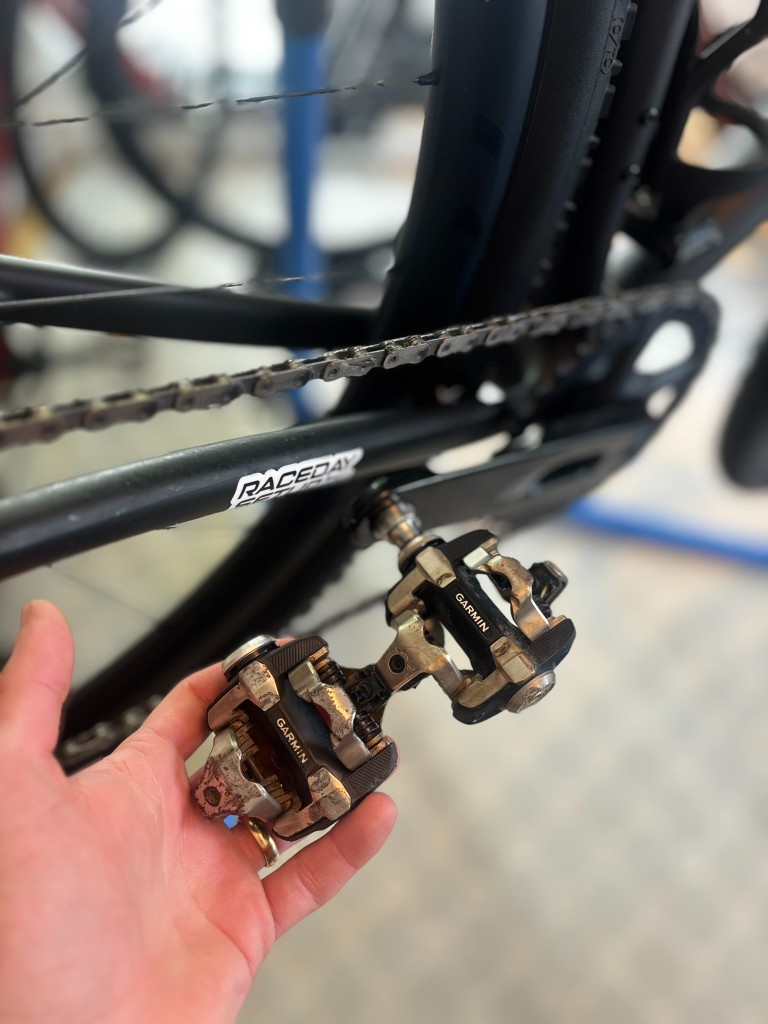
3. They’re noticeably bigger and heavier than Shimano XTR pedals
These are tall pedals. They’re also heavy compared to a good non-power SPD pedal.
The stack height and size were mostly an occasional annoyance while I was using them on my mountain bike, but when I switched mainly to Shimano XTR pedals, I really noticed the difference. I had more room on techy climbs, and I had fewer pedal strikes. That was one of those changes where I didn’t fully appreciate the downside until I moved away from it.
4. The pedal feel is good, but not as good as XTR
To be clear, these aren’t bad as just plain old pedals. The clip-in feel is good. I don’t think much about them on the gravel bike. But compared with Shimano XTR, they don’t feel as secure or as crisp. XTR is just better as an actual pedal.
For gravel, pedal performance matters less. For XC mountain biking, where pedal strikes, body size, and platform feel are important - it’s not the best feel you can get from an off-road pedal.
Reliability
The electronics:
Never ran into any issues with the electronics. The power data has been consistent, reliable, and plays nicely with head units, watches, and Zwift on the computer. I have absolutely smashed these things on rocks at high speeds and they’ve never missed a beat.
The battery life is stellar. I rarely have to swap them, which gives me no reason to doubt the advertised 120 hours of battery life. I’ve also never had them die mid-ride on me. They seem to give plenty of heads up when they’re running low.
The pedal body / bearing / seal side:
Every time I’ve opened up these pedals, they’re filthy inside. The seals on the pedals do a poor job of keeping dirt and grime out. You really have to be on top of your service schedule to keep them clean. If you’re not, the bearings will wear out quickly and you’ll be looking at around $400 to replace the pedal bodies to get a fresh set of bearings. On the new XC210/110s, it looks like that’s about a $600 rebuild to do both pedals.
If these were designed such that you could press new bearings into the pedal body, I’d say they’re a much better long-term proposition. But for me, having to drop $400-$600 on new pedal bodies every year is a dealbreaker.
Garmin Rally XC100 vs. Shimano XTR + SRAM Spindle Power Meter
I switched to Shimano XTR pedals and a SRAM spindle-based power meter in late 2024, partly to support my Flight Attendant setup, and it’s been the better long-term power and pedal solution for me.
Why?
- XTR pedal action feels more crisp
- XTR pedals are slimmer and lighter
- I get fewer pedal strikes
- They don’t seem to care how often you service them (still clean on the inside after thousands of miles)
- Service is cheap - new spindles with bearings are around $140 total and a new set of pedals is only around $200
That doesn’t mean pedal-based power is a bad move. It probably just takes 3 or more bikes that you’d otherwise equip with individual power meters and run off-road pedals on all of them. It’s also less convenient to be swapping pedals on all of your bikes every time you want to ride a different bike - at that point it’s more of a cost-savings consideration than a convenience one.
A Note on the Newer Garmin Rally XC Pedals
Garmin has since released a newer generation of Rally XC pedals (XC210/110s), and the pricing for single-sided is $600 with dual-sided being $900 - a little cheaper than the previous generation, which is great to see.
But from a long-term ownership perspective, for high-mileage riders in messy conditions, the rebuild cost is pretty steep. Maybe the new seals are better and the bearings last long enough to negate the expensive rebuild cost on this generation. You’re still putting power meter electronics into a pedal, and pedals live a hard life on mountain bikes.
Who These Make Sense For
I think pedal-based power meters like this make the most sense for riders who:
- want the easiest possible power meter installation
- don’t want to think too hard about drivetrain compatibility
- aren’t prioritizing getting the absolute best pedal feel
- ride a lot of different off-road bikes and don’t want to change major drivetrain components
- want dual-sided power in the easiest package possible
That last one is important. If you care about tracking left/right balance - for example, during injury recovery or when watching a known imbalance - pedal-based systems are one of the easiest ways to get there.
Who Should Probably Skip Them
I’d be hesitant to recommend these for:
- high-mileage off-road riders
- riders who are hard on pedals and bearings
- riders who care a lot about pedal strikes and stack height
- riders who prioritize long-term durability and low service cost
- riders who are comfortable installing spindle, spider, or crank-based power meters
If you’re putting a ton of rough miles on your bike, I think it’s worth asking whether pedal-based power is the right place to hide expensive electronics.
Final Thoughts
The Garmin Rally XC100 did exactly what I wanted on the power side. The data was consistent. The electronics were reliable. The portability was legitimately useful.
What ultimately soured me on them for mountain biking was the pedal body itself:
- the seals
- the bearing wear
- the service frequency
- the long-term rebuild cost
- the fact that the pedal itself isn’t as good as a top-end Shimano pedal
That doesn’t make them bad. It just makes them a pretty expensive “easy button” with some real long-term tradeoffs. If you ride a ton off-road and care about durability, pedal feel, and long-term serviceability, I’d encourage you to consider a more traditional crank-based power meter combined with a solid, regular old pedal.
Deal Finder
Where to buy
Related Gear

Garmin Edge 1040 Review – Incredible Battery Life
Why I trust the Edge 1040 for every race and training ride. Full review here.
Read the review → Buy Now
Tacx Garmin Neo 2T Smart Trainer
A rock-solid direct-drive smart trainer that delivers natural feel, perfect power accuracy, and near-silent operation — without any fuss.
Read the review →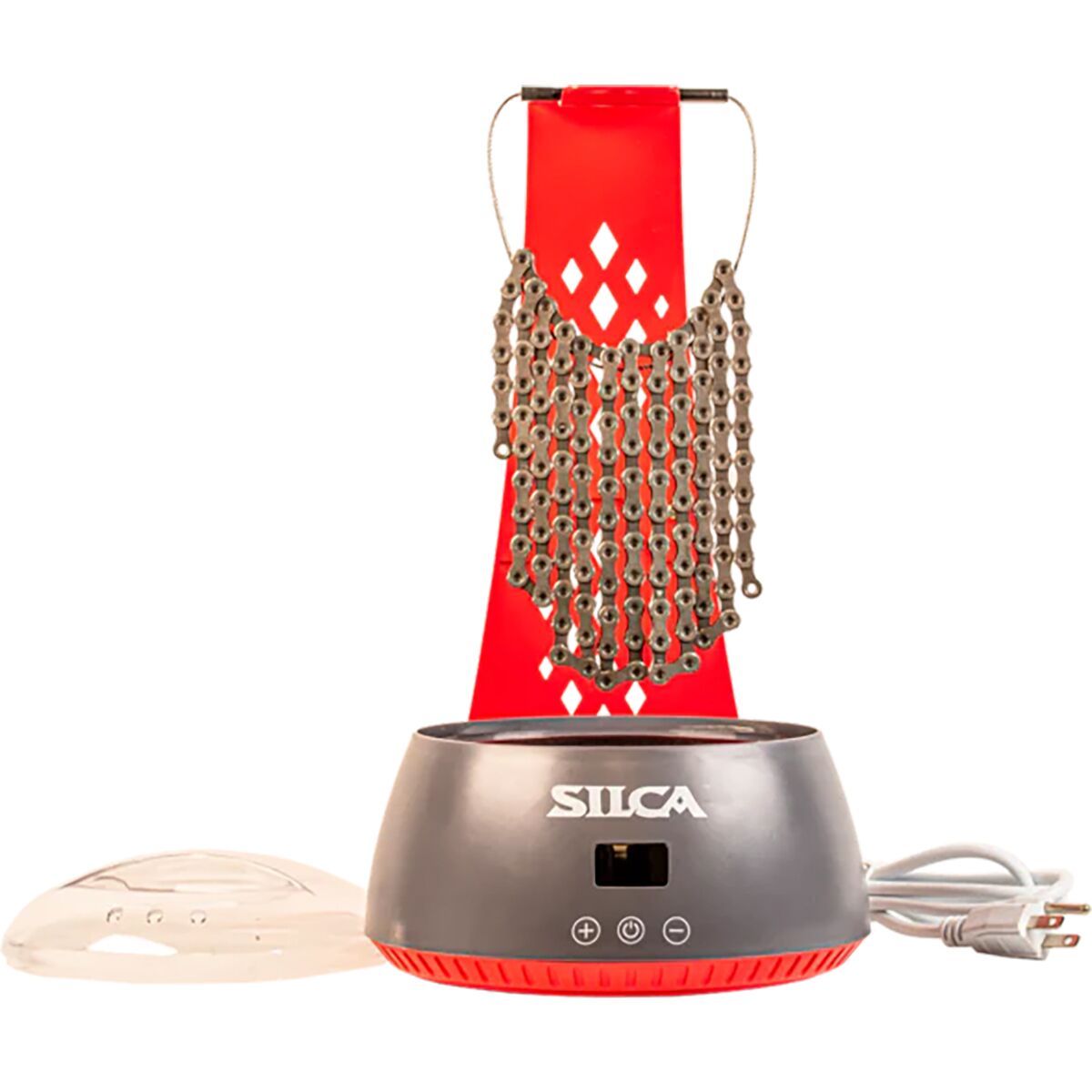
Silca Chain Waxing System
Efficient wax heating pot for dipping chains in hot melt wax.
Read the review → Buy Now